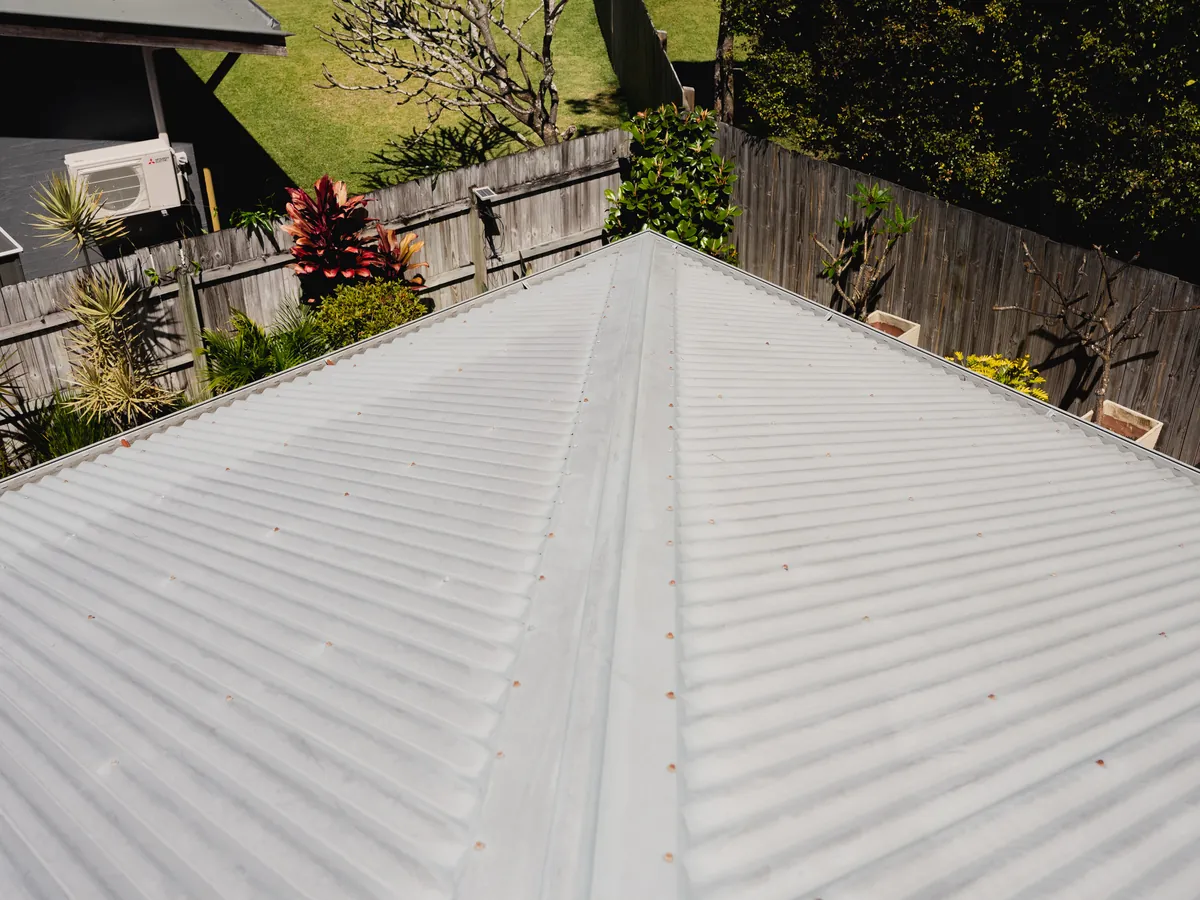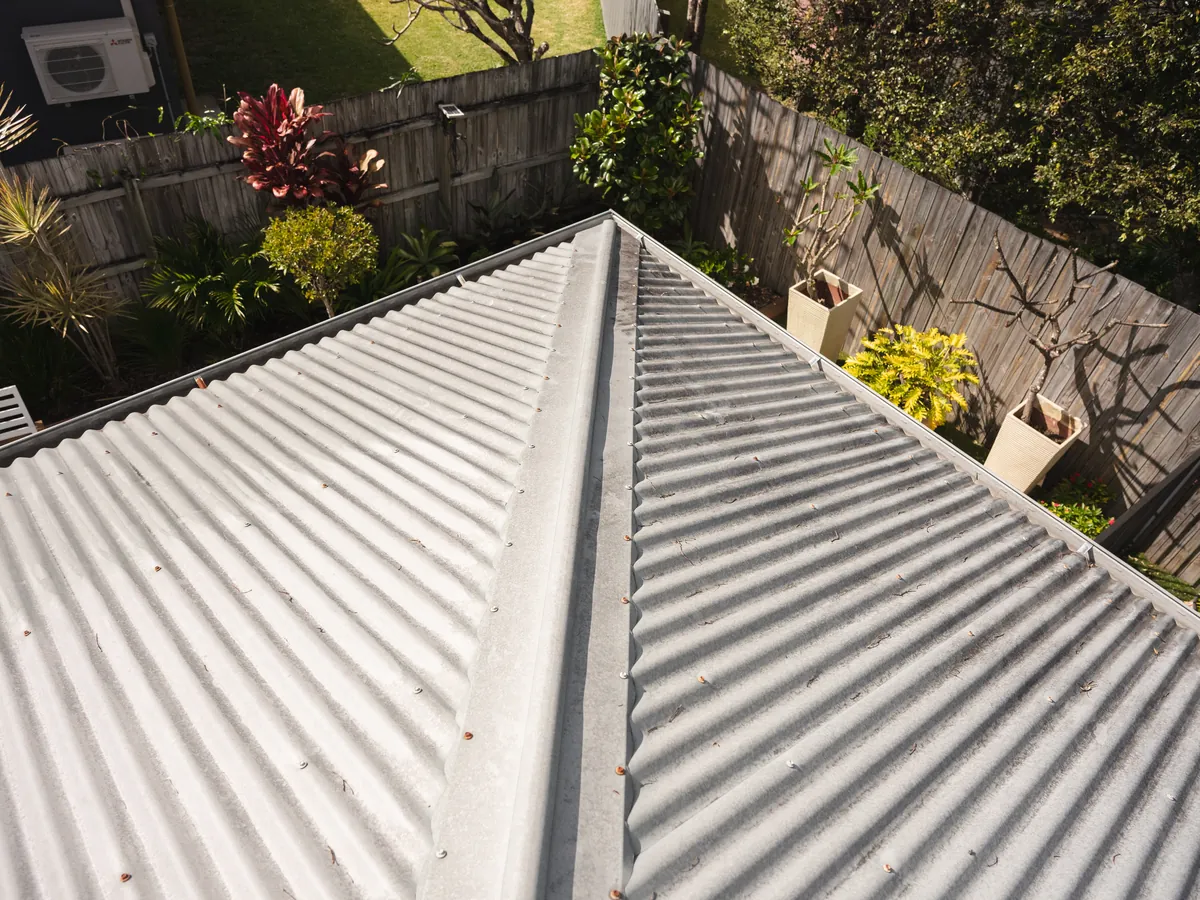
A roof inspection in Ballina is worth doing every one to two years for most homes, every year if you are beachfront or the roof is more than ten years old, and after any big storm. Salt, humidity and wind wear out the small parts of a roof here (screw washers, pointing, flashings, gutter joins) years before the roof itself is finished, and a proper check catches that while it is still a few hundred dollars to fix. This guide explains why Ballina, Lennox Head and the surrounding suburbs need checks more often than inland towns, what a professional roof check actually covers, what it usually finds, and what a written roof report costs.
How often should a roof in Ballina be inspected?
Generic Australian advice from insurers and national guides says a professional roof inspection every three to five years, with your own look from the ground each season. That is fine in Dubbo. On the Northern Rivers coast we work to a shorter cycle, based on what we find on local roofs: every one to two years for most coastal homes, annually for beachfront roofs or any roof more than ten years old, and every two to three years for inland hinterland homes with no salt exposure.
On top of the routine cycle, three events should trigger a check on their own: after a major storm or a cyclone-strength east coast low, before you buy or sell (a roof is the most expensive single element of a house to replace and the hardest to judge from the driveway), and whenever you see a new stain on a ceiling or water where it should not be.
BlueScope, the maker of Colorbond, backs this up for metal roofs: its maintenance bulletin (TB-4) says fastener inspection should be part of the regular maintenance routine, with any screw showing red rust considered for replacement, and that sheltered unwashed areas of steel should be washed every three months in coastal areas where salt spray is in the air, not every six months as elsewhere. If the manufacturer wants salt rinsed off quarterly near the surf, a once-a-decade look at the roof is not enough.
Why do Ballina roofs need checking more often than inland homes?
Because the damage here is cumulative and mostly invisible from the ground. Salt spray settles on the roof, UV cooks the rubber washers under every screw, humidity keeps the undersides of laps and the valleys damp, and wind-driven rain gets pushed uphill past any seal that has started to go. None of that announces itself. The roof looks the same from the street right up until the first stain appears on a ceiling.
The exposure is not the same across the area, which is why a local check matters more than a generic schedule:
East Ballina, Lighthouse Beach, Shelly Beach and the headland streets: open-ocean and river-mouth salt at once. Ridge capping, flashings and older galvanised gutters go first, and most of the 1970s to 1990s brick-and-tile homes here are due for repointing rather than new tiles.
Lennox Head, Skennars Head and Boulder Beach: the most exposed roofs in the service area. Beachfront Colorbond washers and screws can start failing from around eight to ten years, which is why these roofs get an annual check.
Ballina Island, the CBD, Shaws Bay and West Ballina: less direct salt, more humidity, and flat low-lying blocks where blocked valleys and undersized gutters cause as many leaks as the roof does.
Cumbalum, Alstonville and Wollongbar: a step back from the salt, but overhanging trees, leaf litter and lichen on tile roofs do the damage instead.
We have been on roofs across this area for 28 years and the pattern is consistent: the roof fails piece by piece, starting with the cheapest parts. A check is how you keep replacing cheap parts instead of ceilings.
What does a professional roof check actually cover?
A proper roof check looks at four things and reports on all of them: the roof covering, the components that keep water out, the drainage, and the structure underneath. If any of those is skipped, you have half an answer. This is what we cover on every Ballina roof check:
The roof surface: every sheet or tile field, looking for rust at cut edges and laps, cracked, slipped or porous tiles, swarf (metal filings that look like rust but are not), lifted sheets and hail or branch damage.
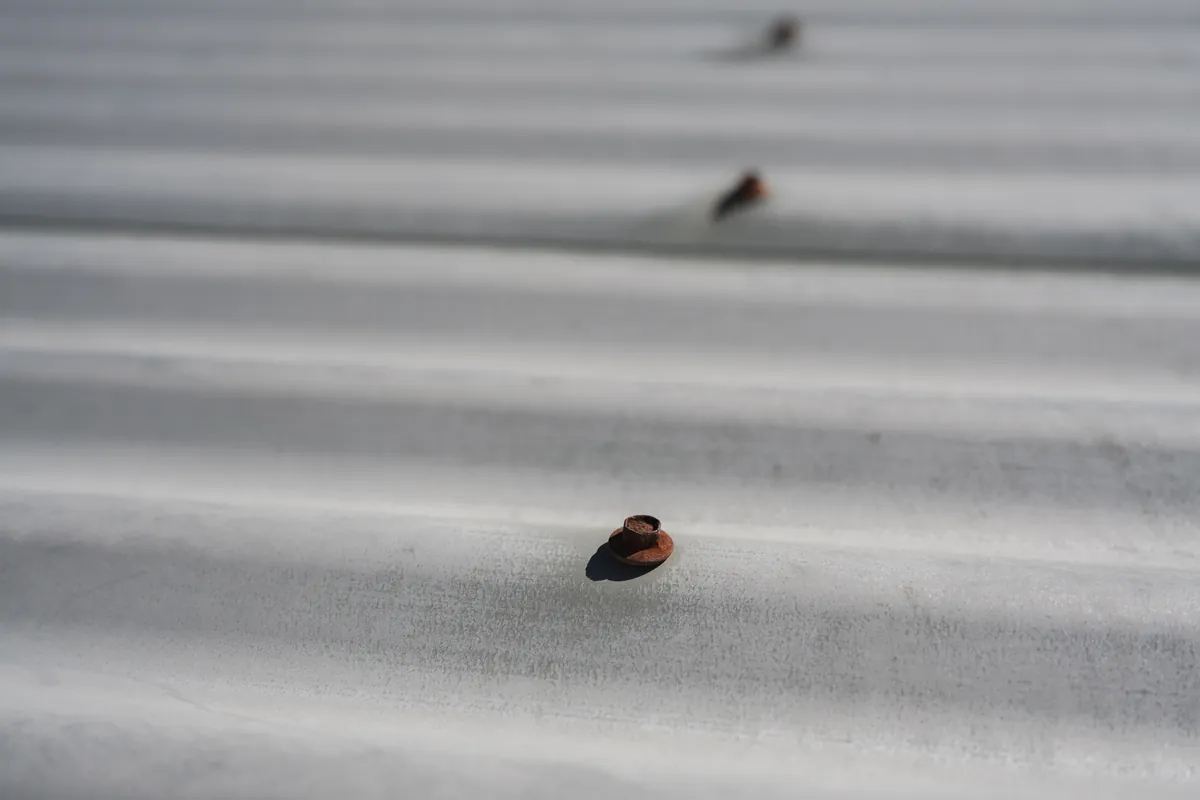
Fixings: on a metal roof we sample screws across every face of the roof, checking for perished washers, backed-out screws, stripped holes and red rust. On a tile roof we check tile clips and the nails or screws holding the ridge and hip caps.
Flashings and penetrations: every chimney, skylight, vent pipe, whirlybird, solar penetration and wall abutment is checked individually, because that is where most leaks start, not in the middle of a sheet.
Ridge capping, bedding and pointing on tile roofs: cracked mortar, missing pointing and loose caps, and whether the pointing is old rigid sand-and-cement or modern flexible compound.
Gutters, valleys, downpipes and overflows as a system: not just whether they are full of leaves, but whether the fall is right, the outlets are big enough for the roof area, and the valley trays are rusting through.
The roof cavity, where there is safe access: water staining on battens and rafters, daylight through the covering, torn or perished sarking, damp or compressed insulation, and the marks of old leaks that dried up years ago. The cavity is also where we tell a real leak from condensation, which fools a lot of people.
What could not be seen: if a section was unsafe to walk, hidden under solar panels or blocked in the roof space, the report says so rather than quietly implying it was checked.
Where a roof is too steep, too brittle or too high to walk safely, we photograph it by drone and say so. A drone shows the surface well but cannot lift a flashing or test whether a ridge cap is loose, so we only use it where walking the roof is the wrong call.
What does a roof check usually find around Ballina and Lennox Head?
In rough order of how often we see them:
Perished screw washers and rusting screw heads on metal roofs. The sheet is fine; the seal around the fixing is not. On a beachfront roof this is close to universal past the ten-year mark, and the fix is a whole-roof re-screw with Class 4 (AS 3566) fixings rather than chasing single screws.
Cracked ridge pointing and loose ridge caps on tile roofs, especially the older brick-and-tile streets of East Ballina and Ballina. A repoint and rebed fixes it for years.
Blocked valleys and overflowing or undersized gutters, most often on Ballina Island and West Ballina where street trees drop into valleys and the ground is flat. A lot of what gets reported to us as a roof leak is a drainage problem.
Failed sealant and lifted flashings around skylights, vents and solar penetrations, often where another trade has cut into the roof.
Lichen and moss holding water on tile roofs near the river, and cut-edge rust at sheet laps on metal roofs facing the ocean.
Swarf mistaken for rust. Fine metal filings from the original installation oxidise on the surface and look exactly like rust. They clean off; genuine rust needs treating. Plenty of roofs are condemned for swarf, which is one reason to get a roofer rather than a generalist to look at a metal roof.
Most of these are a few hundred to a couple of thousand dollars to fix if they are caught early: leak repairs from $350, rust treatment from $400, gutter cleaning from $300, a repoint or a re-screw from $2,000. Left for a few more wet seasons, the same faults turn into stained ceilings, wet insulation, rotten battens and rusted-through sheets.
Can I check my own roof from the ground?
Yes, and you should, between professional checks. Stay off the roof: a wet, mossy or salt-slick roof is where most roofing falls happen, and old tiles crack under feet that do not know where to step. From the ground, with binoculars if you have them, look for rust rings around screw heads, brown streaks running down from screw lines, cracked or missing ridge pointing, slipped tiles, gutters overflowing in rain, plants growing in the gutters, and sagging gutter runs. Inside, look for water stains, bubbling paint, a musty smell and damp insulation in the roof space after heavy rain. Our coastal roof maintenance checklist walks through the seven things to look at each year.
What you cannot do from the ground is the part that matters most: check the washers, test the ridge caps, lift a flashing or see the roof cavity. That is the professional check, and it is why a ground look does not replace one.
What does a roof report include and what does it cost?
A roof check on its own tells you what we found. A roof report writes it down so you own the information and can act on it, get other quotes against it, or show it to an insurer or a buyer.
Our Standard Roof Report is $249 for a single-storey home up to about 250 square metres. It includes a full external inspection (safe access or drone where suitable), 30 to 60 annotated photos covering every element, a condition rating for each element, a priority list split into Urgent, Within 12 months and Monitor, itemised repair cost estimates, and a branded PDF delivered within 48 hours.
The Pre-Purchase and Insurance Report is $399 and adds a roof cavity check where accessible, estimated remaining roof life and insurance-ready notes, with a guaranteed 48-hour turnaround for contract deadlines. Large and commercial roofs are $549.
The report fee is credited to any repairs you book with us within 30 days, so if the report finds something and you fix it with us, the report has effectively cost you nothing. If it finds nothing urgent, you have paid a few hundred dollars for the certainty and a dated record of the roof's condition, which is exactly what insurers ask for when a storm claim turns into an argument about wear and tear.
A word on free inspections. A roofer who inspects your roof for nothing is there to win the job, which is fair enough and often produces good advice. But what you get is an opinion attached to a quote, not a document you own. When the recommendation is a $4,000 restoration or a re-roof, a written report that three contractors can price against is cheap by comparison. Be especially careful with unsolicited roof checks offered door to door after a storm.
What if the check finds the roof is fine?
Then that is what the report says. A fair share of the roofs we check in Ballina and Lennox Head need nothing more than a gutter clean, a couple of screws or a Monitor note on a flashing to look at again next year. We do not write up work a roof does not need, and a report that condemns every imperfection on a 30-year-old roof without ranking them is not much use to anyone. What you want from a check is a short list of what needs doing now, what can wait and what is simply being watched, so you can plan and budget rather than panic.
Is a maintenance plan better than one-off checks?
For a lot of coastal homes, yes. Our roof maintenance plan from $295 a year bundles the annual check with gutter and valley clearing and minor fixes on the day, so the roof is looked at properly every year without you having to remember, and small faults are fixed while we are already up there. It suits beachfront homes, holiday lets and absentee owners in particular. If you would rather deal with the roof as needed, a roof report every year or two does the same job with a bit more admin on your side.
Booking a roof check in Ballina, Lennox Head and surrounds
We are based in Lennox Head and cover Ballina, East Ballina, West Ballina, Cumbalum, Skennars Head, Alstonville, Wollongbar and the rest of the Northern Rivers. Book a roof report online, send photos through the quote form, or call 0412 483 911 and tell us what you are seeing. If water is coming in right now, say so and we will aim to make-safe the same or next day, weather permitting, and do the full check once the weather clears.
Questions
Common questions
Sources
Need this checked on your roof?
We're local to Lennox Head and cover the whole Northern Rivers. Every job is photo-documented and warranted.
- roof inspection Ballina
- what does a roof inspection cover
- roof check
- roof inspection Lennox Head
- roof report Ballina
- coastal roof maintenance Northern Rivers
- how often should a coastal roof be inspected
- roof maintenance Ballina
Coastal Roofing Repairs
Local Northern Rivers roofers · 28 years on the tools · insured
Written by the Coastal Roofing Repairs team, 28 years roofing on the NSW North Coast. We work on coastal metal and tile roofs every day — these guides come straight from what we see on the tools, not a marketing desk.