Solar panels on the Northern Rivers coast pick up bird droppings, salt film, pollen and grime, and anything that shades the glass cuts what the panels produce. Rain rinses off loose dust but often not the rest. A gentle wash with fresh water and a soft brush once or twice a year keeps them working, but a high-pressure clean is the wrong tool: solar installers warn it can crack the glass and void the warranty.
Key takeaways
Dirty panels produce less power, and bird droppings can drag down a whole panel or more. Coastal homes get a salt film that rain doesn't always shift. Clean with fresh water and a soft brush, in the cool of the morning or late afternoon. Don't use a high-pressure washer, abrasives or harsh chemicals on solar panels. Panels are live electrical equipment on a roof, so the job is best left to someone trained and harnessed.
Why do solar panels need cleaning?
A solar panel only makes power from the light that reaches its cells. Dust, pollen, leaf litter, bird droppings and salt all block some of it.
Bird droppings are the worst offender because they sit in one spot and shade cells completely. Energy Matters, an Australian solar retailer, notes that on a micro-inverter system the affected panel may produce little or no power, and on a string system a dropping covering part of one panel can drag down output further.
On the coast there is another layer. Energy Matters also points out that coastal areas build up a marine residue that leaves a film on panels, which can be difficult to remove and reduces efficiency. For homes in Lennox Head, Skennars Head, East Ballina, Byron Bay, Suffolk Park, Evans Head and Brunswick Heads, that salt film is part of normal life.
Doesn't the rain clean solar panels?
Partly. Rain is good at rinsing off light dust, and Solargain, a national solar installer, says panels on a normal pitched roof are largely self-cleaning in an area with regular rain.
What rain doesn't reliably shift is anything stuck to the glass: bird droppings, sap, lichen starting at the frame edge, and the salt and grime film that dries on after each shower. Panels on flat or very low-pitched roofs (Solargain mentions under about 5 degrees) drain poorly and collect more dirt along the bottom edge.
A quick look from the ground or a ladder tells you a lot. If you can see droppings, a grey film or a line of grime along the lower frame, a wash is worth it.
Why shouldn't you pressure wash solar panels?
Because the people who make and install them say not to.
Solargain's advice is blunt: don't use a high-pressure washer, because it can cause microfractures in the glass and risks voiding your warranty. A Norfolk Island Regional Council fact sheet on cleaning solar systems says the same thing: use water, not cleaning products, avoid high-pressure water cleaners, don't use scourers or abrasive cleaners, and always follow the manufacturer's recommendations.
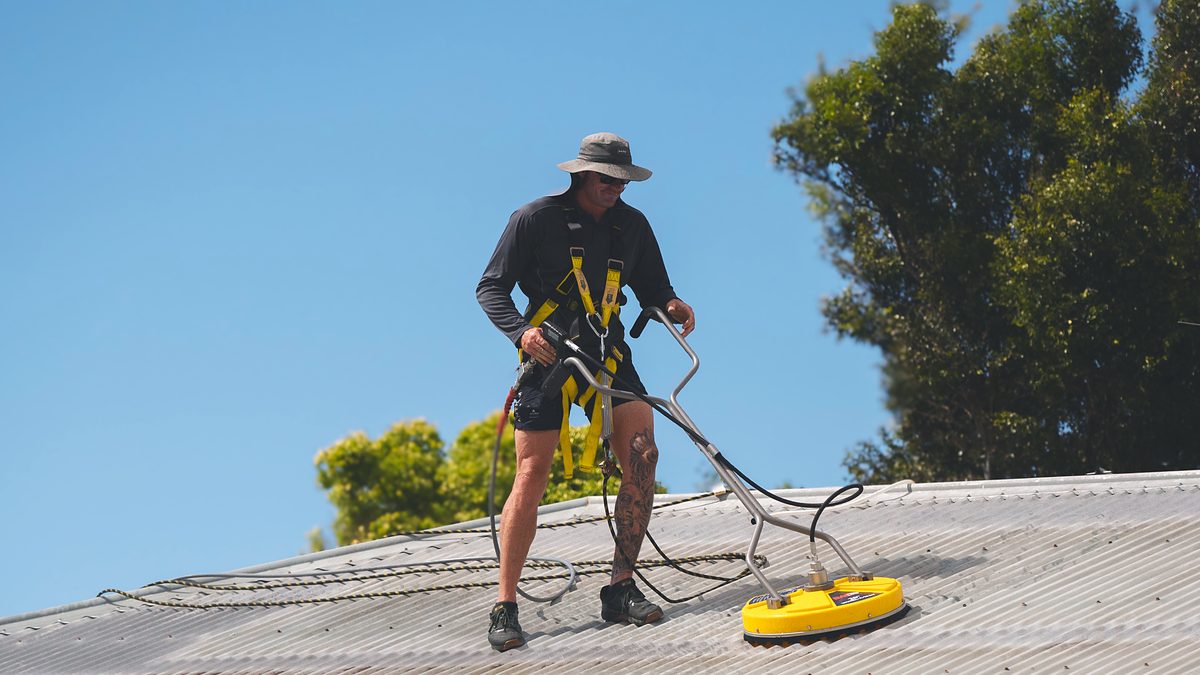
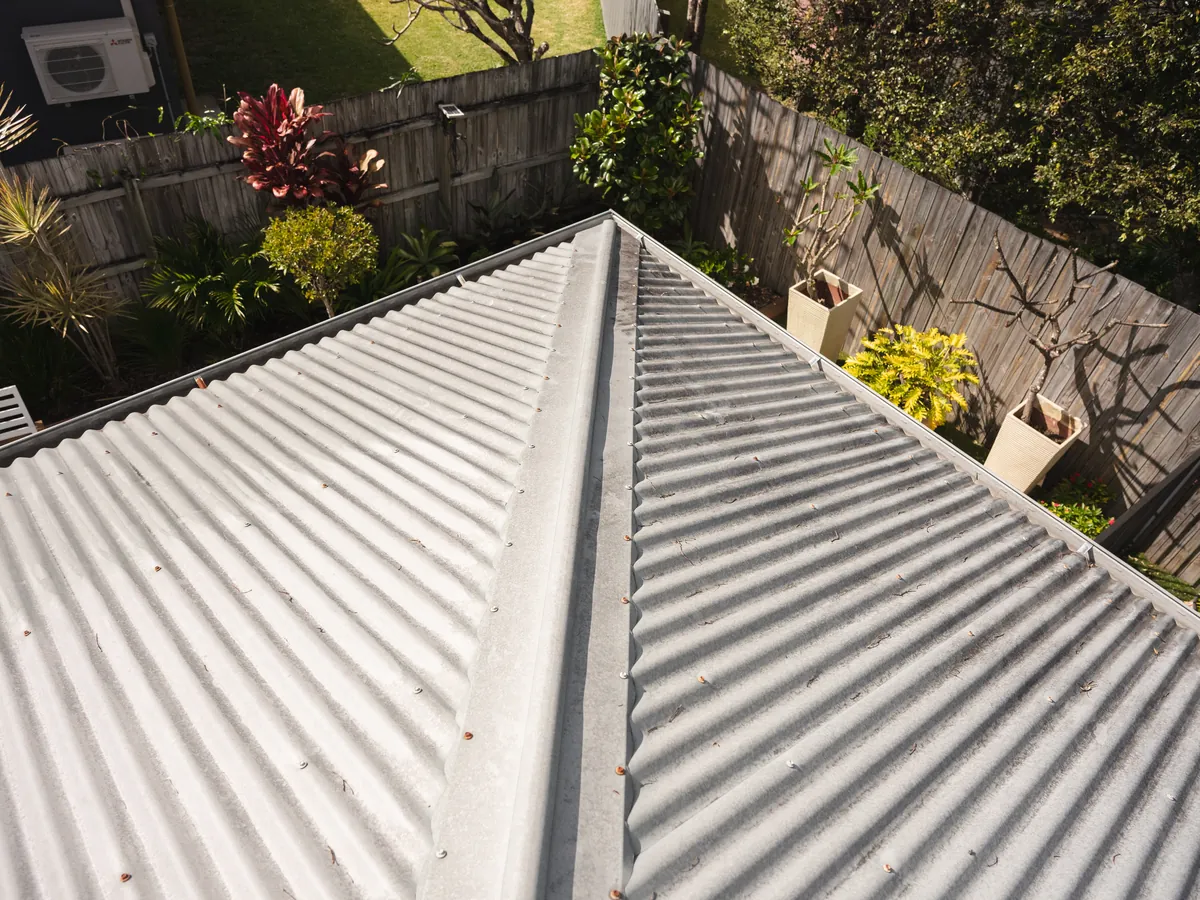
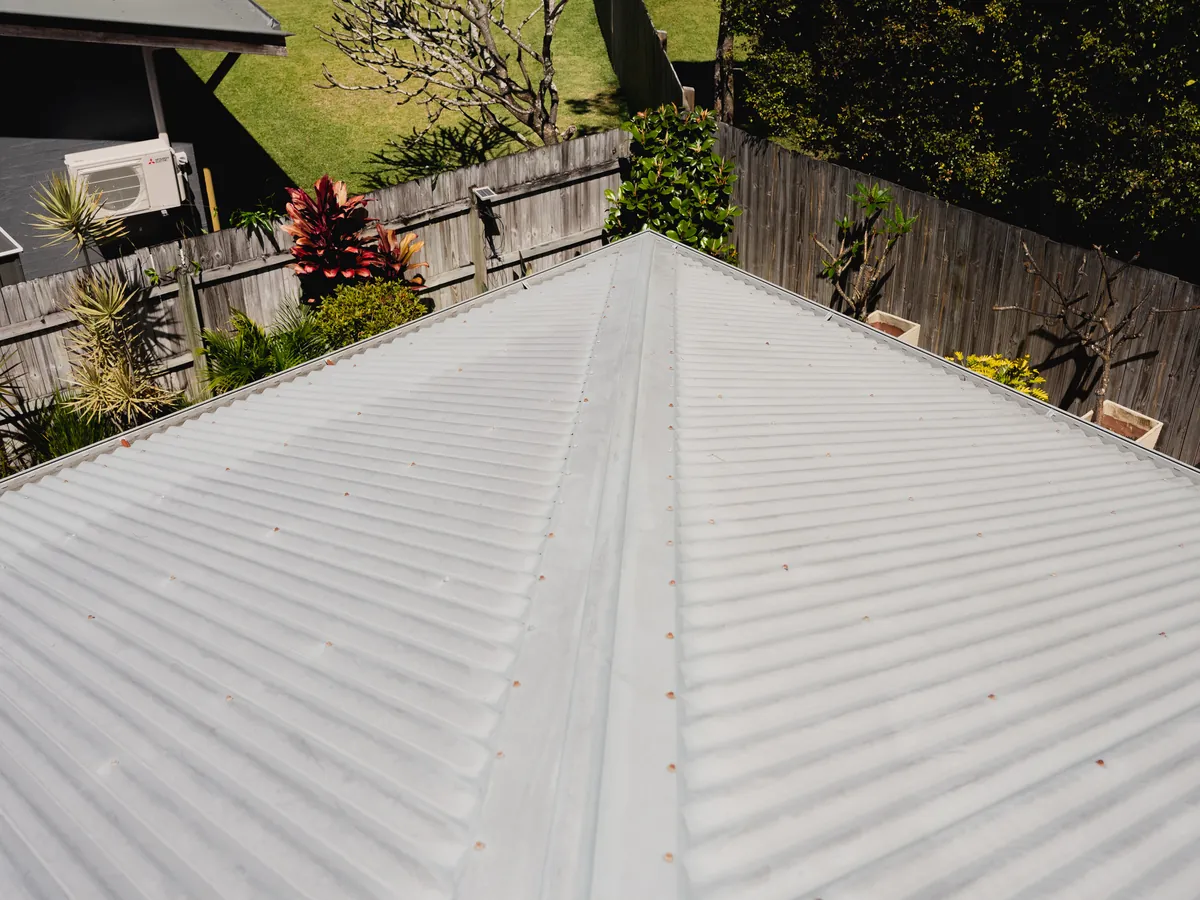
So when we pressure clean a roof that has solar on it, the high-pressure water stays off the panels. Panels get a gentle approach, the roof around them gets the clean it needs.
How should solar panels be cleaned?
The gentle way, every time:
Use fresh water. A garden hose is usually enough. Use a soft brush or sponge for droppings and film. A little mild soap is fine if the grime is stubborn, rinsed off well. No pressure washers, scourers, metal tools or harsh chemicals. Clean early in the morning or late in the afternoon. Solargain warns that cold water on a hot panel can cause cracking, and cool panels also dry without streaks. Don't stand, lean or rest buckets on the panels. Check the manufacturer's cleaning instructions for your panels, because they set the warranty rules.
How often should solar panels be cleaned on the Northern Rivers?
Red Energy's guidance is that in most environments cleaning once or twice a year is enough, with more frequent cleaning in dusty or dirty spots. Energy Matters also suggests at least twice a year.
On the Northern Rivers that usually means once after the wet season and once before summer, and more often if you're close to the beach, under trees that drop leaves and sap, or have birds roosting on the roof. Checking your inverter or solar app helps too: if output drops on clear days compared with the same time last year, dirty panels are one thing to check.
Is it safe to clean your own solar panels?
From the ground with a hose, yes. On the roof, it's a different job.
Panels are electrical equipment that generates power whenever light hits it. Red Energy recommends using a Clean Energy Council accredited technician and notes the power from solar panels is as dangerous as conventional electricity. The Norfolk Island fact sheet says maintenance should be done by a qualified person who is aware of the electrical risks. Add a wet roof and fragile glass, and climbing up with a bucket is not worth the risk.
While anyone is up there, it's also a good time to check what's under and around the panels: leaves and debris trapped beneath the frames, loose roof screws near the mounting rails, and gutters below the array, which fill quickly.
Booking a roof clean when you have solar
If you're booking a roof or gutter clean with us, tell us you have solar panels so we can plan the job around them and talk through cleaning them at the same time. We'll keep high-pressure water off the panels, clear the leaves and debris that build up around and under the array, and let you know if we spot anything that needs a solar technician.
Coastal Roofing Repairs works across Lennox Head, Skennars Head, East Ballina, Ballina, Cumbalum, Byron Bay, Suffolk Park, Bangalow, Alstonville, Wollongbar, Lismore, Evans Head and Brunswick Heads. Call 0412 483 911 or email office@coastalroofingrepairs.co.
Questions
Common questions
Sources
Need this checked on your roof?
We're local to Lennox Head and cover the whole Northern Rivers. Every job is photo-documented and warranted.
- solar panel cleaning
- solar panel maintenance
- salt on solar panels
- bird droppings solar panels
- roof cleaning Lennox Head
- coastal home maintenance
Coastal Roofing Repairs
Local Northern Rivers roofers · 28 years on the tools · insured
Written by the Coastal Roofing Repairs team, 28 years roofing on the NSW North Coast. We work on coastal metal and tile roofs every day — these guides come straight from what we see on the tools, not a marketing desk.