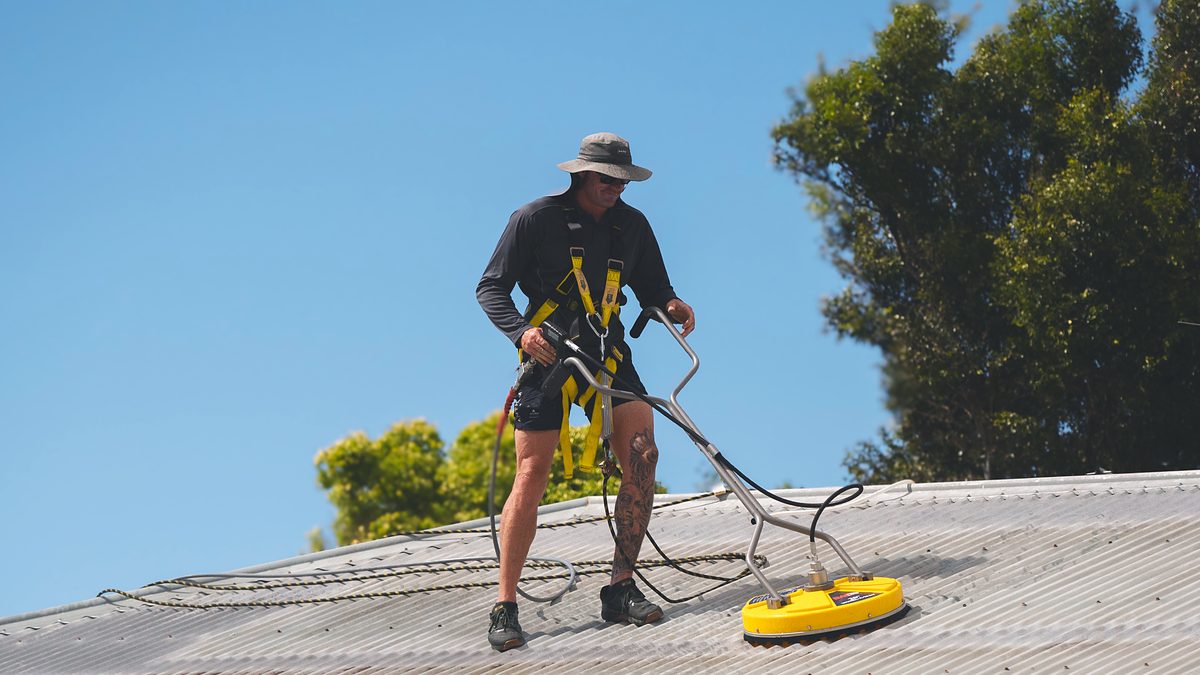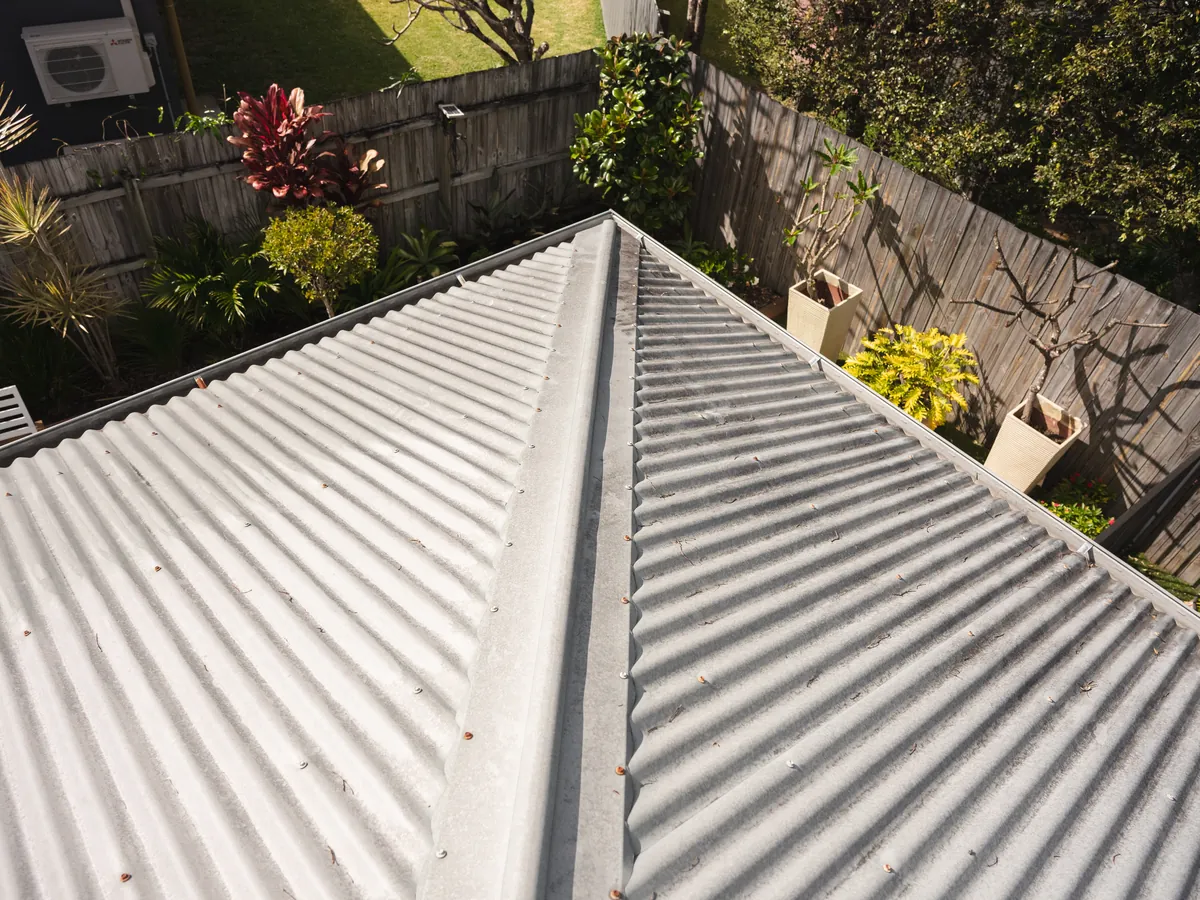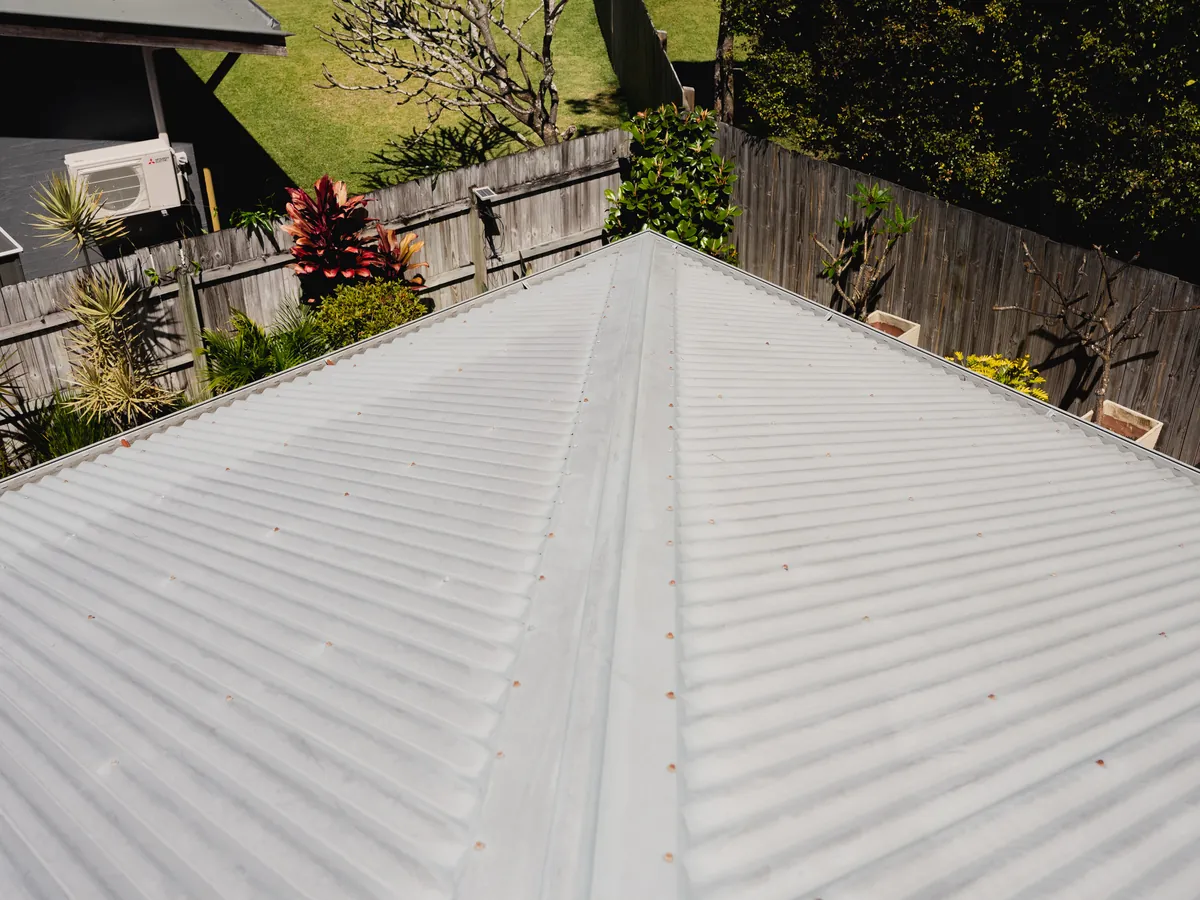
A concrete or terracotta tile roof can be pressure cleaned, as long as the pressure suits the tiles and the ridges are checked at the same time. A Colorbond or other painted metal roof should get a low-pressure soft wash, not a high-pressure blast. On the Northern Rivers coast the bigger job is often salt rather than moss: BlueScope says the parts of a metal roof that rain doesn't wash need cleaning every three months in coastal areas.
Key takeaways
Tile roofs: a controlled pressure clean removes moss, lichen and grime, with the pressure eased off on older or fragile tiles. Colorbond and metal roofs: a low-pressure soft wash with clean water or a mild detergent, never abrasives or solvents. Coastal salt: wash the areas rain doesn't reach (under eaves, the underside of gutters) every three months near the sea, according to BlueScope. Not every roof needs cleaning. A lightly dirty roof with nothing growing on it is usually fine. On the Northern Rivers, our roof pressure cleaning starts from $1,000 for an average single-storey home, and driveways from $400.
Is it safe to pressure clean a roof?
It depends on what the roof is made of.
Concrete and terracotta tiles are hard enough for a pressure clean, and it is the most effective way to lift lichen, moss and the black grime that builds up on south-facing slopes. The risk is technique, not the tiles themselves: too much pressure held too close can scour the surface of old concrete tiles, drive water up under the laps, or blow out cracked ridge pointing. A careful operator walks the roof first, notes any broken tiles and weak pointing, and adjusts the pressure to the roof in front of them.
Painted metal roofs, including Colorbond, are a different case. The colour is a factory paint system on the steel, and the aim of any clean is to leave that finish intact. That is why metal roofs get a low-pressure soft wash: enough water and a mild cleaner to lift salt, mould and dirt, without blasting the surface.
Asbestos cement (fibro) roofs are the exception. They should not be pressure cleaned at all. If you think your roof may contain asbestos, have it tested before anyone goes near it with water.
How do you clean a Colorbond roof without damaging it?
BlueScope, the maker of COLORBOND steel, publishes a maintenance bulletin (Technical Bulletin TB-4) that sets out how its prepainted steel should be washed. The main points are:
Wash with clean fresh water, or a mild solution of pure soap or non-abrasive dishwashing detergent in warm water. Use a sponge, soft cloth or soft-bristle nylon brush. No abrasive scourers or steel wool. Never use abrasive or solvent-based cleaners such as turpentine, petrol, kerosene or paint thinners. Test any cleaning method on a small, out-of-the-way section first.
The bulletin does not give a pressure setting, which is another reason a soft wash is the sensible approach on a painted metal roof. If your roof is still under a manufacturer's warranty, check the warranty terms before any cleaning or painting, or ask BlueScope directly.
Does salt air mean a coastal roof needs washing?
Yes, but mostly in the places you would not expect.
BlueScope's own advice is that a roof surface that is regularly washed by rain does not usually need this maintenance. The trouble spots are the areas rain never reaches: the underside of eave gutters, wall cladding tucked under the eaves, the tops of garage doors and similar sheltered surfaces. Salt and dirt sit there, hold moisture and attack the coating.
For those unwashed areas, TB-4 says to wash every six months as a minimum, or every three months in locations such as coastal areas. On the Northern Rivers that applies most to homes close to the water in Lennox Head, Skennars Head, East Ballina, Byron Bay, Suffolk Park, Evans Head and Brunswick Heads. Further inland, in Alstonville, Wollongbar, Bangalow or Lismore, salt is less of a factor and moss and lichen under trees are usually the bigger issue.
The same logic applies to gutters. Salt and leaf sludge sitting in a gutter is what eats through it, which is why we clear gutters after every roof clean.
How often should a roof be cleaned near the coast?
There is no single right answer, and it is worth being honest about that. For the roof surface itself, most homes on the Northern Rivers are well served by a clean every few years, and sooner where moss and lichen take hold under trees or on shaded slopes. For the sheltered metal areas near the beach, follow BlueScope's three-monthly guideline, which most homeowners can do themselves with a garden hose from the ground.
A roof does not need cleaning just because it looks a little dull. Book a clean when:
- Moss or lichen is visible across the tiles or sheets.
- Black streaks or mould have built up, usually on south-facing slopes.
- You are about to sell and the roof is letting the street appeal down.
- The roof is about to be painted or restored.
- Gutters keep filling with grit and sludge washed off the roof.
Do I need to clean my roof before painting it?
Always. Roof paint will not bond properly to moss, lichen, dirt or salt, and a coating that goes on over them starts to peel early. That is why cleaning is the first stage of any proper roof painting or restoration, followed by repairs (broken tiles, ridge pointing, failed screws, rust), then a primer or sealer and two coats of roof membrane paint.
If you are thinking about painting, there is no point paying for a clean on its own first. Our roof painting and restoration starts from $4,000 for an average single-storey home and already includes the clean. See our roof painting and restoration page for what is involved, and our roof restoration cost guide for the ranges published for NSW.
What does roof and driveway pressure cleaning cost on the Northern Rivers?
These are our own published from-prices, confirmed on site before any work starts:
Tile roof pressure clean: from $1,000 for an average single-storey home. Colorbond or metal roof soft wash: from $1,000. Driveway and path pressure cleaning: from $400. Gutter clean on its own: from $300. Minimum call-out: $300.
What moves the price is roof size, pitch, number of storeys, access and how heavy the moss or lichen build-up is. Two-storey homes need extra safety set-up, and a heavily overgrown roof takes longer. A soft wash on metal is slower and more careful than a tile clean, which is why it is not cheaper even though it uses less pressure.
You can get a price through our pressure cleaning quote form, which asks for your roof type, size and photos so the estimate is closer before we come out.
Clean, repair or paint: what does your roof actually need?
A clean fixes dirt, moss, lichen and salt. It does not fix cracked ridge pointing, broken tiles, loose or rusted screws, or a coating that has worn through. If the roof has any of those, a clean on its own just makes the problems easier to see.
If you are not sure, a roof report is the cheapest way to find out. For $249 you get a photographed inspection and a written list of what is wrong, what is fine and what each fix costs, and the fee is credited to repairs booked within 30 days.
Coastal Roofing Repairs cleans, repairs and paints tile and metal roofs across Lennox Head, Skennars Head, East Ballina, Ballina, Cumbalum, Byron Bay, Suffolk Park, Bangalow, Alstonville, Wollongbar, Lismore, Evans Head and Brunswick Heads, with Class 4 coastal fixings as standard and a written workmanship warranty. Call 0412 483 911 or email office@coastalroofingrepairs.co.
Questions
Common questions
Sources
Need this checked on your roof?
We're local to Lennox Head and cover the whole Northern Rivers. Every job is photo-documented and warranted.
- roof pressure cleaning
- roof cleaning Lennox Head
- Colorbond soft wash
- tile roof cleaning
- salt air roof damage
- driveway pressure cleaning
- roof painting preparation
Coastal Roofing Repairs
Local Northern Rivers roofers · 28 years on the tools · insured
Written by the Coastal Roofing Repairs team, 28 years roofing on the NSW North Coast. We work on coastal metal and tile roofs every day — these guides come straight from what we see on the tools, not a marketing desk.