After a long run of wet weather, roofs, driveways, paths and pool surrounds on the Northern Rivers often go black, green and slippery. Mould, algae and lichen need moisture to grow, and weeks of rain give them exactly that. A pressure clean once the weather dries out removes the growth before it holds water against your roof or turns a path into a slip hazard.
Key takeaways
Mould, algae and lichen need moisture, and a wet season gives it to them for weeks at a time. The wettest months at Ballina Airport are February to April, according to Bureau of Meteorology averages, so late autumn is a natural time to clean. Driveways and paths covered in algae become slippery and dangerous. Wait for a dry spell before cleaning, and fix any roof problems the clean uncovers. Our driveway and path cleaning starts from $400, and roof cleaning from $1,000 for an average single-storey home.
Why does mould build up after lots of rain?
Mould is a fungus, and NSW Health describes it as present almost everywhere, indoors and outdoors. What it needs to grow is moisture and something to feed on. Outside, that means damp surfaces with a film of dirt, leaf litter or organic grime, which describes most roofs, driveways and paths after a wet month.
Algae and lichen behave in a similar way. Bunnings' advice on cleaning driveways in the tropics puts it simply: algae and mould grow prolifically because of wet season weather conditions, and driveways and walkways become slippery and dangerous.
On the Northern Rivers the problem builds in late summer and autumn. Bureau of Meteorology averages for Ballina Airport show February, March and April as the wettest months of the year. Shaded areas dry slowest, so the south side of a roof, paths under trees and the driveway beside a fence usually go first.
Where does the mould show up first?
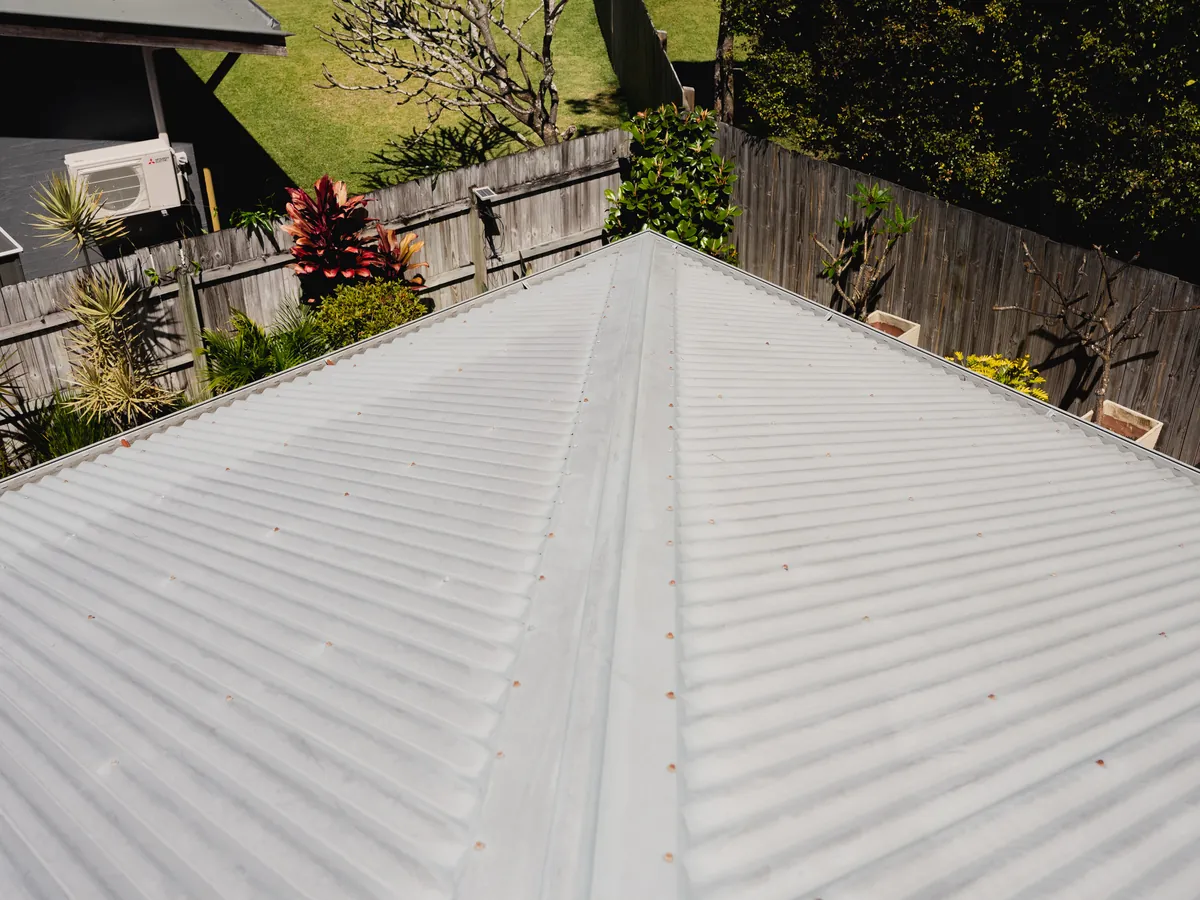
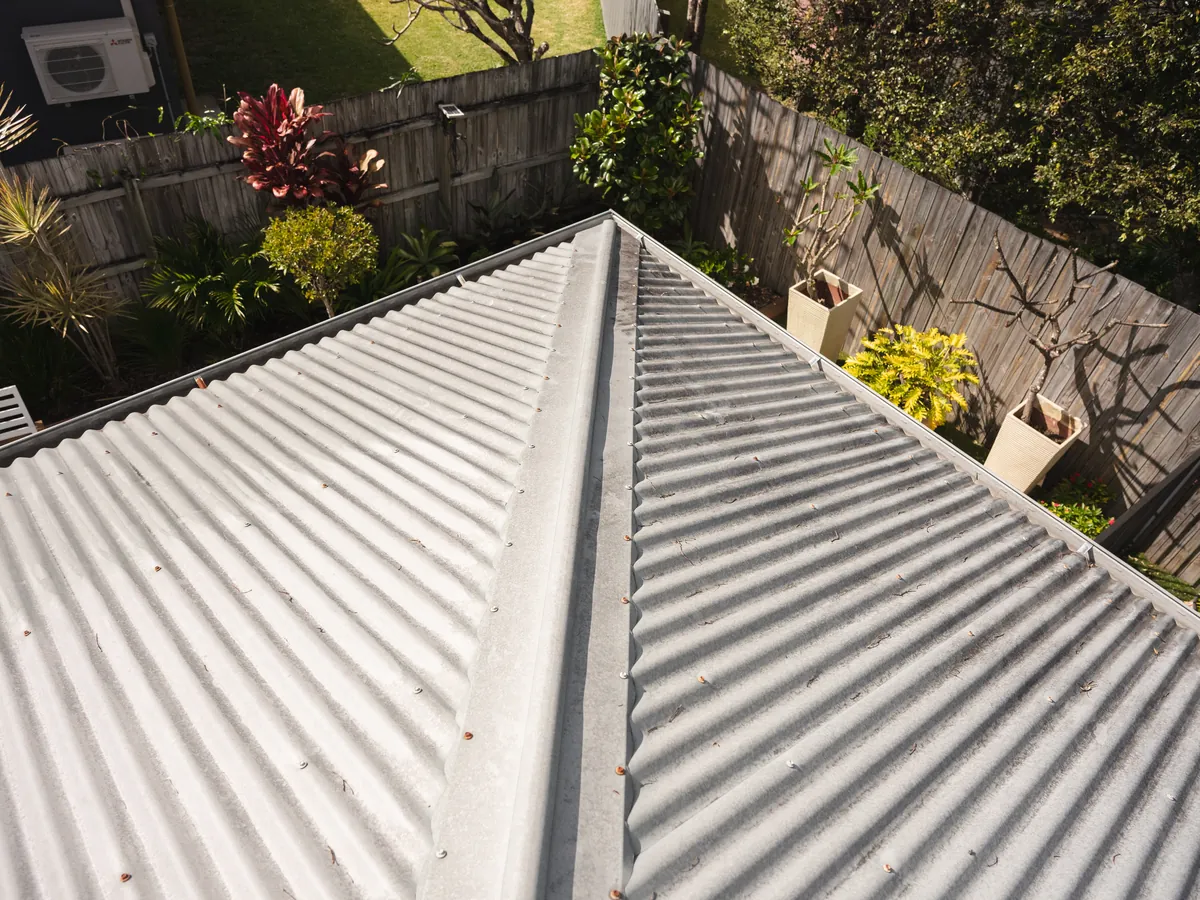
On a Colorbond or metal roof: black streaks running down the sheets from the ridge and laps, usually heaviest where water runs off slowly or trees overhang. On a tile roof: dark patches of mould and grey-green lichen, especially on south-facing slopes and around ridge capping. In gutters and valleys: sludge that stays wet, holds leaves and starts to smell. On driveways, paths and pool surrounds: a green or black film that is slick when wet. Exposed aggregate and pavers trap it in the joints. On walls and eaves: grey or black spotting under the eaves, where rain doesn't wash the surface.
If you can see it from the street, it has usually been building for a while.
Is mould on the roof or driveway a real problem, or just looks?
Some of it is looks, but not all of it.
Slip risk is the main one. A path or driveway covered in algae is slippery after the next shower, which matters for kids, older family members and anyone carrying shopping.
On the roof, growth holds moisture against the surface for longer after each rain. On tile roofs it works into porous concrete tiles and the pointing; on metal roofs the dirty, damp film sits on the paint. Gutters clogged with sludge overflow, and overflowing water ends up where it shouldn't, in fascias and eaves.
And if you're selling or renting the house out, a black roof and a green driveway make a property look neglected in listing photos.
When is the best time to pressure clean after the wet season?
Clean after the rain, not during it. Wait for a settled dry spell so surfaces can dry, the growth is easy to see and the clean lasts. Cleaning in the middle of a wet week just gives mould a fresh, damp surface to come back on.
For most Northern Rivers homes that means late autumn into winter, after the February to April wet months. If a storm season has been especially wet, a clean in spring before summer is worth considering too.
If a path is dangerously slippery now, don't wait for the perfect week: get it cleaned and keep people off it in the meantime.
How is each surface cleaned?
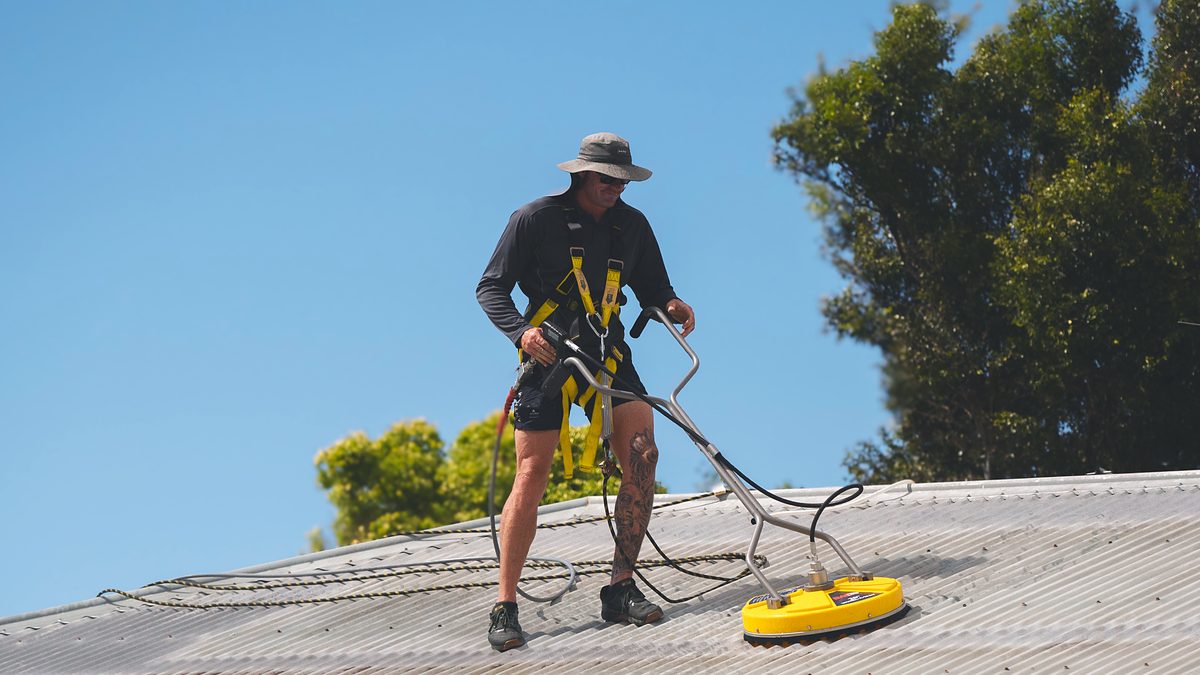
Driveways, paths and pool surrounds: a pressure clean with a surface cleaner lifts mould, algae, tyre marks and grime evenly without leaving stripes. Exposed aggregate and pavers need care so loose stones and joint sand aren't blown out. Tile roofs: a controlled high-pressure clean, with the pressure eased off on older or fragile tiles and the ridges checked as we go. Colorbond and metal roofs: a low-pressure soft wash, not a high-pressure blast, so the paint finish isn't stripped. Gutters: cleared by hand after the roof is cleaned so washed-off debris doesn't block the downpipes.
Our article on whether you should pressure clean your roof goes into the tile versus Colorbond difference in more detail.
What does it cost on the Northern Rivers?
These are our own published from-prices, confirmed on site before work starts:
Driveway and path pressure cleaning: from $400. Tile roof pressure clean: from $1,000 for an average single-storey home. Colorbond or metal roof soft wash: from $1,000. Gutter clean: from $300. Minimum call-out: $300.
Size, access, the number of storeys and how heavy the build-up is move the price. Booking the roof, gutters and driveway on the same visit is usually better value than three separate call-outs.
Book a clean once the weather clears
Coastal Roofing Repairs pressure cleans roofs, driveways and paths across Lennox Head, Skennars Head, East Ballina, Ballina, Cumbalum, Byron Bay, Suffolk Park, Bangalow, Alstonville, Wollongbar, Lismore, Evans Head and Brunswick Heads. While we're on the roof we check for cracked pointing, loose screws and blocked valleys, and tell you honestly if anything needs fixing.
Call 0412 483 911, email office@coastalroofingrepairs.co, or use the pressure cleaning quote form on our website.
Questions
Common questions
Sources
Need this checked on your roof?
We're local to Lennox Head and cover the whole Northern Rivers. Every job is photo-documented and warranted.
- pressure cleaning after rain
- mould on roof
- slippery driveway
- driveway pressure cleaning Ballina
- roof cleaning Lennox Head
- wet season maintenance
Coastal Roofing Repairs
Local Northern Rivers roofers · 28 years on the tools · insured
Written by the Coastal Roofing Repairs team, 28 years roofing on the NSW North Coast. We work on coastal metal and tile roofs every day — these guides come straight from what we see on the tools, not a marketing desk.