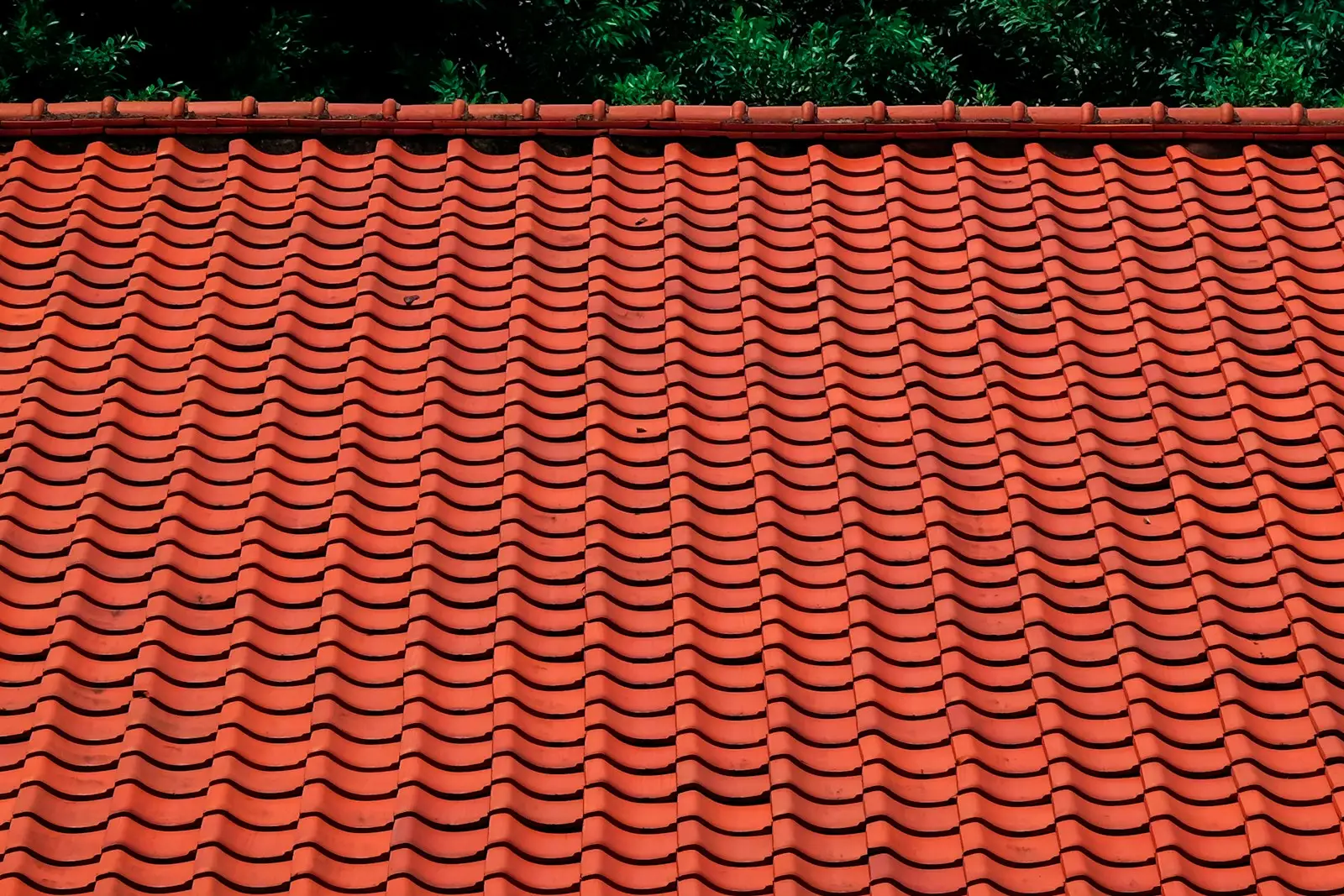
Tile Roof Restoration in Ballina, Lennox Head & Byron Bay
A tile roof restoration fixes and recoats a concrete or terracotta tile roof that is sound but worn: we clean it, replace broken and slipped tiles, rebed and repoint the ridge caps, then seal and apply two coats of roof membrane. On the Northern Rivers it starts from $4,000 for an average single-storey home, confirmed after a free inspection. The ridge work is where most of the value is, because cracked ridge pointing is one of the most common causes of tile roof leaks on the coast.
Why this matters on the Northern Rivers coast
Most brick-and-tile homes built on the Northern Rivers from the 1960s to the 1990s have concrete tile roofs, and coastal weather is hard on them in a particular order. First the ridge mortar dries out and cracks under UV, then wind-driven rain gets in behind the caps. Meanwhile the tile surface wears away, the concrete turns porous, and moss and lichen move in, holding moisture against the roof through the humid months.
That's why a tile restoration here leads with the ridges and the clean rather than the paint. A coating on a porous, mossy tile with loose ridge caps will look good for a season and then fail at exactly the places that leaked before.
Signs you need this
- Cracked, gappy or missing pointing along the ridges and hips
- Ridge caps you can see have moved or sit unevenly
- Broken, cracked or slipped tiles after a storm or a satellite install
- Tiles that stay dark for hours after rain (porous concrete)
- Thick moss or lichen, especially on the shaded slopes
- Water stains on the ceiling near a hip or ridge line
What we do, step by step
- 1
Inspection: every ridge, hip, valley and broken tile is photographed and listed in the quote.
- 2
High-pressure clean to remove moss, lichen, dirt and salt, and to show any hidden cracked tiles.
- 3
Broken and slipped tiles replaced with matching or salvaged tiles.
- 4
Ridge and hip caps rebedded on fresh bedding where the old mortar has failed, then repointed with flexible pointing.
- 5
Valleys and gutters cleared; rusted valley irons flagged and quoted if they need replacing.
- 6
Sealer coat on concrete tiles, then two coats of roof membrane, finished with a photo report.
What's included
- Photographed inspection of every ridge, hip and valley
- High-pressure clean of the whole roof
- Replacement of broken or slipped tiles found at inspection
- Ridge and hip rebedding where needed, plus flexible repointing
- Valley and gutter clear-out
- Sealer and two membrane coats on concrete tiles
- Before-and-after photos and a written workmanship warranty
Materials we use — and why they suit coastal homes
Ridges are finished with flexible pointing compound rather than plain sand-and-cement mortar, because a roof that heats and cools every day moves, and rigid mortar cracks. Concrete tiles get a penetrating sealer before the membrane coats so the paint has something sound to grip, which matters most on old, porous tiles. Replacement tiles are matched to your profile wherever possible. If you'd rather not coat a terracotta roof, we leave it uncoated and finish it with the clean, tile replacement and ridge work only.
Concrete tile vs terracotta tile: what we do differently
Concrete tiles are the most common roof on older Northern Rivers brick homes. They are strong but porous once their original surface wears off, so they are cleaned, repaired, sealed and coated. Coating concrete tile is what brings back both the colour and the weather resistance.
Terracotta is fired clay. Glazed terracotta keeps its colour for decades, so on those roofs we clean, replace broken tiles, rebed and repoint the ridges, and usually leave the tiles unpainted. Terracotta tiles are more brittle underfoot and dearer to replace, so the work is slower and the tile budget higher, but the coating cost drops out.
Not sure which you have? Concrete tiles are heavier, thicker at the edge and usually show grey concrete where chipped; terracotta shows orange or red clay all the way through.
Ridge capping: where tile roofs on the coast actually leak
On a tile roof, the tiles themselves rarely leak. The ridges and hips do. Ridge caps sit on a mortar bed and are sealed with pointing, and both take the full force of the sun and wind. Once the pointing cracks, wind-driven rain gets under the caps and runs into the roof space, often showing up as a ceiling stain a metre or two away from the real entry point.
That's why we photograph every ridge before quoting, and why the ridge work is itemised separately. If your roof only has ridge problems, that's a repoint, not a restoration. If the ridges have failed and the surface is worn too, doing both at once saves a second set of access costs and gets the whole roof back to a sound, sealed finish.
How much does it cost?
Tile roof restoration from $4,000 for an average single-storey home, confirmed after a free on-site inspection
If your tiles are sound and only the ridges have failed, a ridge rebed and repoint from $2,000 may be all you need, without the coating. If the roof is just dirty, a tile roof pressure clean from $1,000 gives most of the visual lift. We'll tell you which on the day.
Repair, restore or replace?
Restore when the tiles are mostly sound and the problems are ridges, a scattering of broken tiles and a worn surface. Replace when a large share of tiles are cracked, soft or crumbling, when the battens underneath have rotted, or when the roof keeps leaking after repeated patching. On an older concrete tile roof that has simply been neglected, a restoration is usually the far cheaper way to get many more years out of it.