A leak in the middle of a downpour is stressful, and the worst moment to be making decisions on the fly. This is the order we'd tackle it in if it were our own house: keep everyone safe, contain the water, document it, then get the roof looked at properly. It's general guidance from roofers who work on Northern Rivers roofs every day, not a substitute for an inspection.
The first 10 minutes: safety before anything else
Stay off the roof. A wet roof, especially wet metal or moss-covered tile, is slippery, and most serious roofing falls happen in exactly these conditions. From inside, move people and pets away from the wet area. If water is dripping near a light fitting, ceiling fan, power point or switchboard, turn the power off at the switchboard for that circuit if you can reach it safely, and call an electrician if water is getting into fittings. If the ceiling is bulging or sagging with water, don't stand under it: a ceiling holding a lot of water can drop without warning. If it's safe to do so, put a bucket underneath and carefully pierce the lowest point of the bulge with a screwdriver to release the water in a controlled way, standing to the side, not directly underneath.
Contain the water and protect your belongings
Put buckets or tubs under drips and a towel or old sheet in the bucket to cut down on splashing. Move furniture, rugs, electronics and anything precious out of the wet zone, or cover it with plastic. If water is running down a wall, lift the bottom of any curtains and remove things stored against it. Open a window or run a fan or dehumidifier once the rain eases, because trapped damp is what leads to mould in the following days. None of this fixes the roof, it just limits the damage while you wait for a proper repair.
Photograph and note everything before you clean up
Before you mop up, take dated photos and short videos of the ceiling, walls, floor and any damaged belongings, and note the time the leak started and roughly what the weather was doing. If you have home insurance, this record matters, and the Insurance Council of Australia advises speaking to your insurer before you attempt or authorise any building work, including emergency repairs, and keeping receipts for anything you spend. Take photos of the outside of the house from the ground too, such as lifted sheets, missing tiles, or debris on the roof and in gutters, but don't climb up to get them.
Temporary measures: what's reasonable and what isn't
Reasonable from inside the house: buckets, towels, moving belongings, releasing a water-filled bulge safely, and turning off power where water is near electrics. Not reasonable for most homeowners: going on the roof to fit a tarp or plastic sheet in wind and rain. A tarp that isn't fixed properly can blow off, damage more of the roof, or take you with it. Temporary tarping on a storm-damaged roof is a job for a roofer with the right equipment and fall protection. If the leak is serious, ask for an emergency make-safe first and a proper repair after the weather clears.
Why the drip is rarely directly under the hole
Water entering a roof doesn't usually drop straight down. It runs along battens, sarking, sheet laps and ceiling framing before it finds a gap in the ceiling and appears somewhere else, sometimes a metre or more away from where it got in. That's why the stain on your ceiling is a clue rather than an address, and why guessing and dabbing sealant onto the roof often doesn't fix it. Finding the real entry point usually means checking the roof surface, the fixings, the flashings and the roof space together, and sometimes waiting for the right rain and wind direction to reproduce it.
The usual suspects on coastal metal roofs
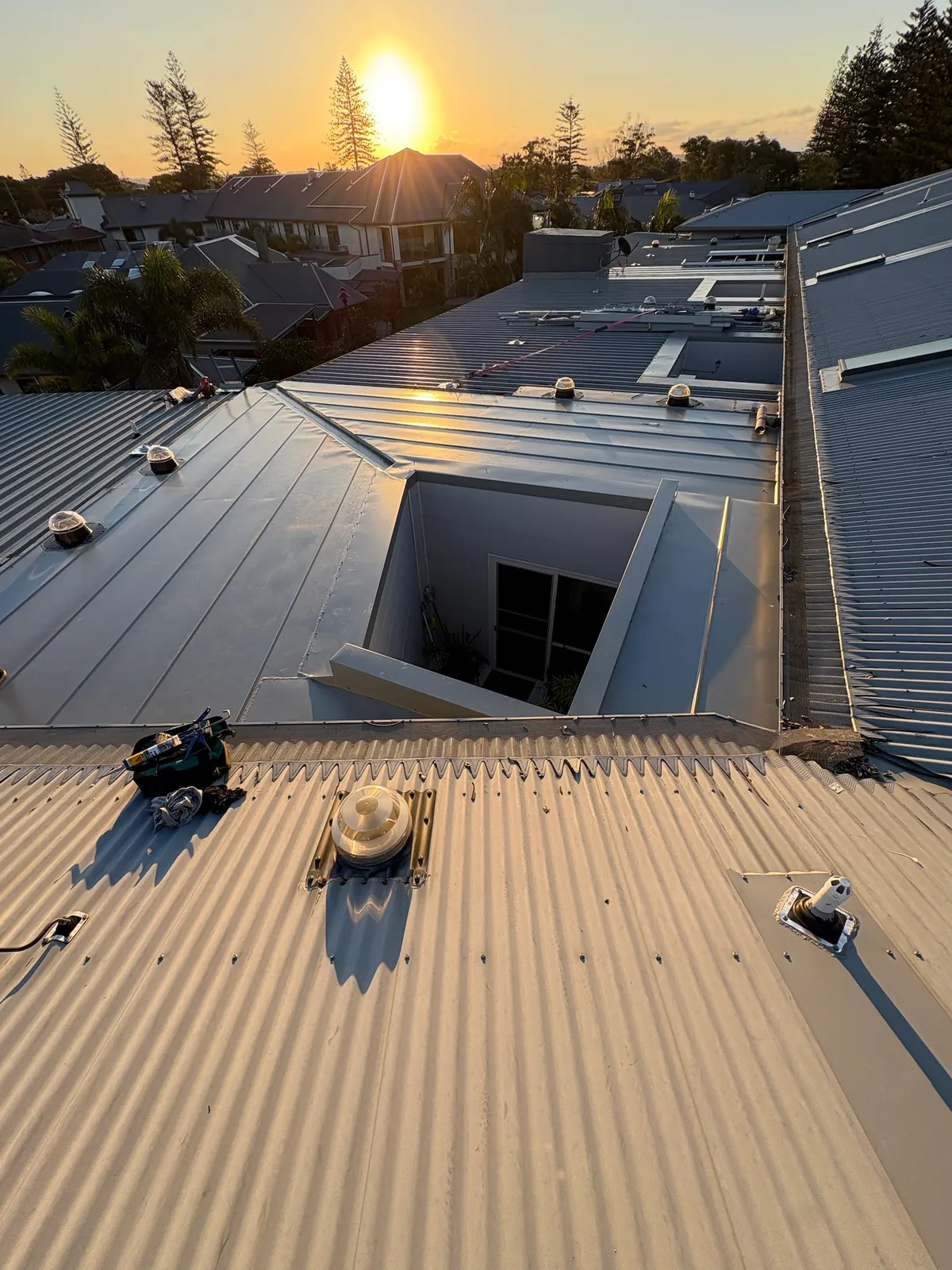
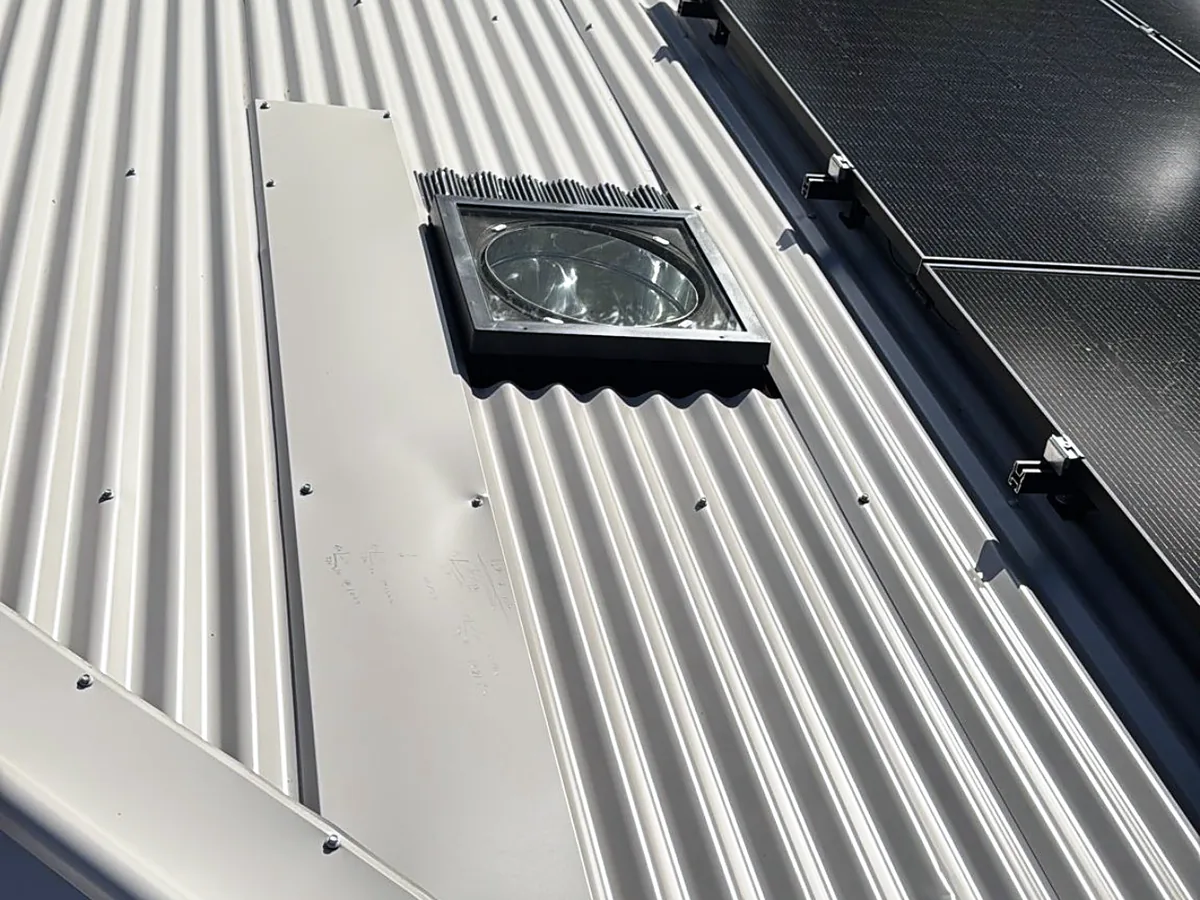
On metal roofs near the coast, the most common cause we see is failed screw washers. The rubber under the screw head perishes with salt and UV, and wind-driven rain is pushed past it. Other common sources are rusted or lifted sheet laps, damaged or poorly sealed flashings around penetrations like vents and skylights, blocked or overflowing gutters and valleys, and cut-edge rust. If your roof only leaks when it's windy as well as wet, fixings are a strong suspect. Our guide to the signs a metal roof needs re-screwing goes through what to look for from the ground.
Common leak sources on tile roofs
On tile roofs the tiles themselves are rarely the whole story. Cracked or slipped tiles, ridge capping where the bedding and pointing has cracked or fallen away, damaged valley irons and flashings, and wind lifting tiles in storms are the usual causes. Ridge cap failure is common on older roofs and is often visible from the ground as cracked or missing pointing along the ridge line.
Is it an emergency or can it wait?
Treat it as urgent if water is coming in near electrics, the ceiling is sagging or bulging, there's active storm damage such as missing sheets or tiles, or the water is coming in faster than you can contain it. A slow drip into a bucket during a storm, with no electrics involved, can usually wait for a proper inspection once the rain stops, as long as you keep containing it and keep documenting. If you're unsure, call: describing what you're seeing and hearing helps us judge how quickly it needs attention.
What a roofer checks, and what happens next
A proper leak inspection looks at the roof surface and fixings, flashings and penetrations, valleys and gutters, and the roof space from the inside where access allows. We photograph what we find so you can see it too. If a make-safe is needed, that comes first. After that we give you a written scope and a quote for the repair, which depends on what we find. We won't quote a price for a leak we haven't seen. If you'd like an independent record of your roof's condition, for example for an insurer or a purchase, that's what our roof reports are for.
When to call us
If you're in Lennox Head, Ballina, Byron Bay, Lismore or anywhere across the Northern Rivers and you have an active leak, call 0412 483 911. If you'd rather send photos and details, use the quote form. For storm damage specifically, see our storm damage and emergency tarping service.
Questions
Common questions
Need this checked on your roof?
We're local to Lennox Head and cover the whole Northern Rivers. Every job is photo-documented and warranted.
Coastal Roofing Repairs
Local Northern Rivers roofers · 28 years on the tools · insured
Written by the Coastal Roofing Repairs team, 28 years roofing on the NSW North Coast. We work on coastal metal and tile roofs every day — these guides come straight from what we see on the tools, not a marketing desk.