Most roof leak repairs in Ballina come down to five things: failed flashings, blocked or rusted valleys, overflowing gutters and downpipes, cracked ridge pointing or tiles, and screws that have lost their seal. A single traced and fixed leak costs from $350, and most land between $350 and $900 depending on the cause and access. This guide explains which causes turn up in which part of Ballina, what each fix costs, and what to do while you wait.
What are the most common causes of roof leaks in Ballina?
After 28 years of fixing roofs between Lennox Head and Ballina, the same short list explains nearly every leak we're called to:
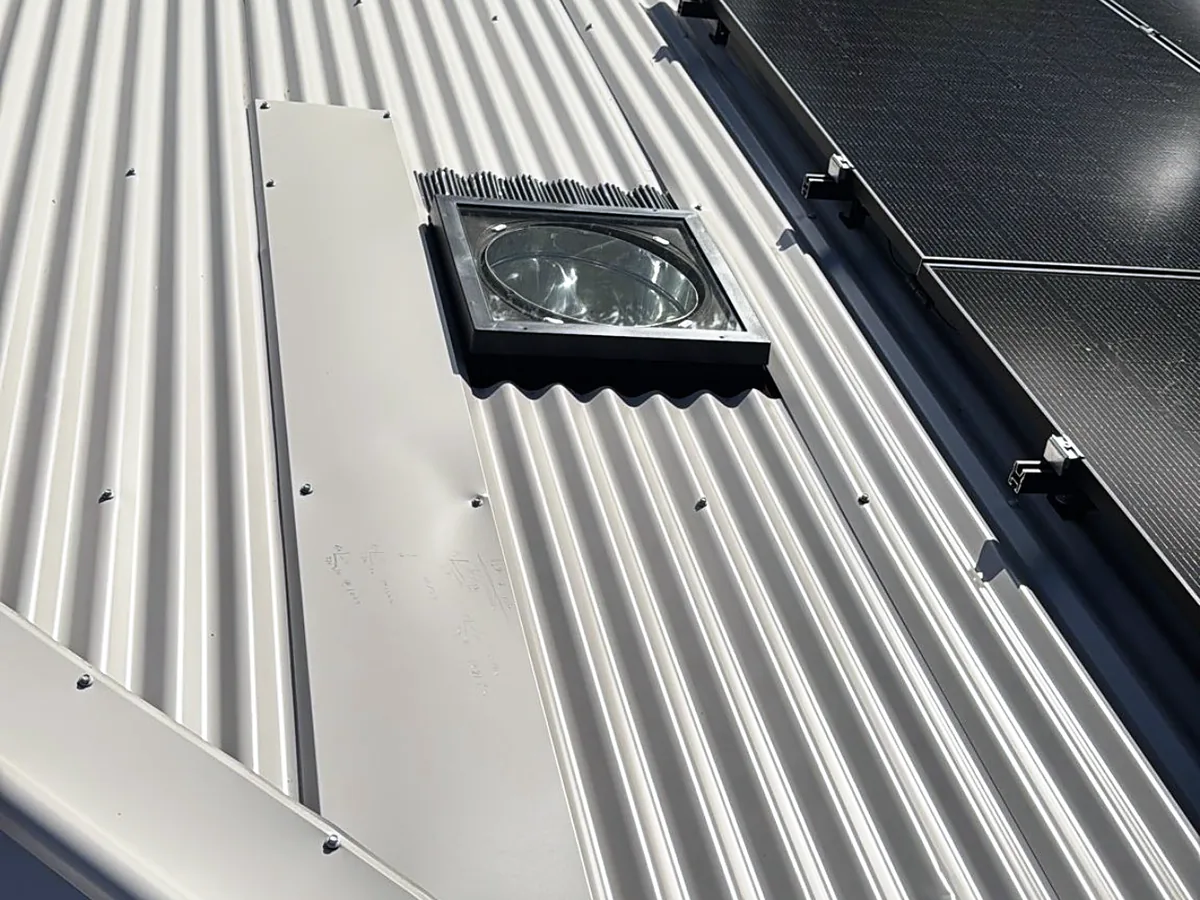
Flashings that have lifted, cracked or were never made for the job, around walls, parapets, skylights, vents and solar brackets. Valleys that are blocked with leaves or rusted through, so water spills sideways under the tiles or sheets. Gutters and downpipes that can't carry a heavy downpour away, so water backs up into the eaves and wall cavities. Cracked ridge pointing, slipped ridge caps or broken tiles on older tile roofs. Screws on metal roofs whose rubber washers have perished, or that have rusted around the hole.
A drip on the ceiling rarely sits directly under the cause. Water runs along sarking, battens and rafters before it finds a way down, sometimes a couple of metres away. That's why the first part of any leak repair is tracing the path from the roof side, not patching the spot above the stain.
Does where you live in Ballina change the likely cause?
Yes, and it's one of the most useful things to know before you call anyone. Ballina is a river town with a beachfront edge, and the roofs age differently across it.
North Wall, Angels Beach, Shelly Beach and Lighthouse Beach: these roofs cop salt spray and the full easterly. We see screws rusting around the hole, ridge capping and flashings corroding first, and leaks that only show up in wind-driven rain, when water is pushed up under laps and flashings that cope fine in calm weather.
Ballina Island, the CBD, Shaws Bay, North Creek and West Ballina: less salt, more humidity and flat, low-lying blocks. Here, as many "roof leaks" start in the gutters and valleys as in the roof itself. Older timber, fibro and brick homes often carry a history of patch repairs and mixed sheet types, and each old patch is a possible entry point.
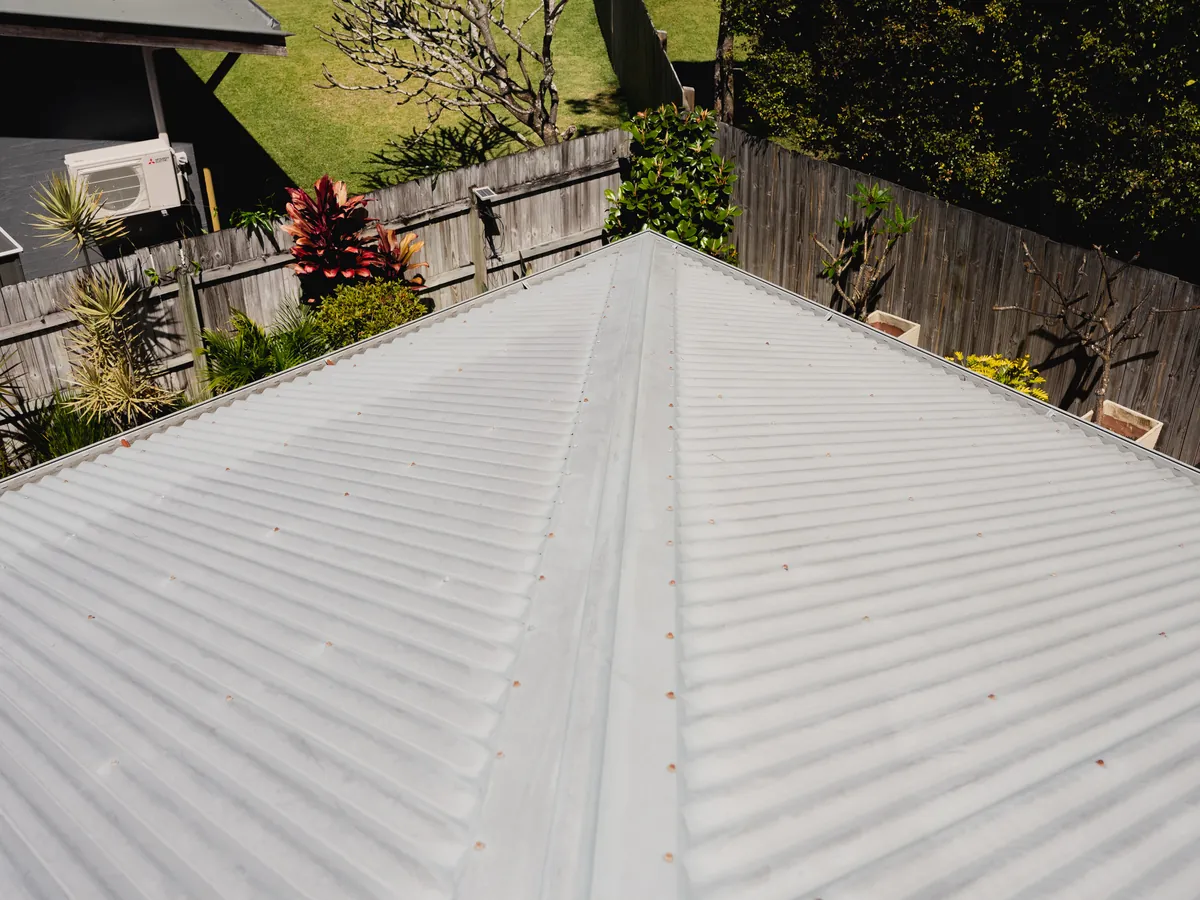
East Ballina: a lot of established brick-and-tile from the 1970s to the 1990s. The tiles are often still sound; the ridge bedding and pointing are what crack and let water in.
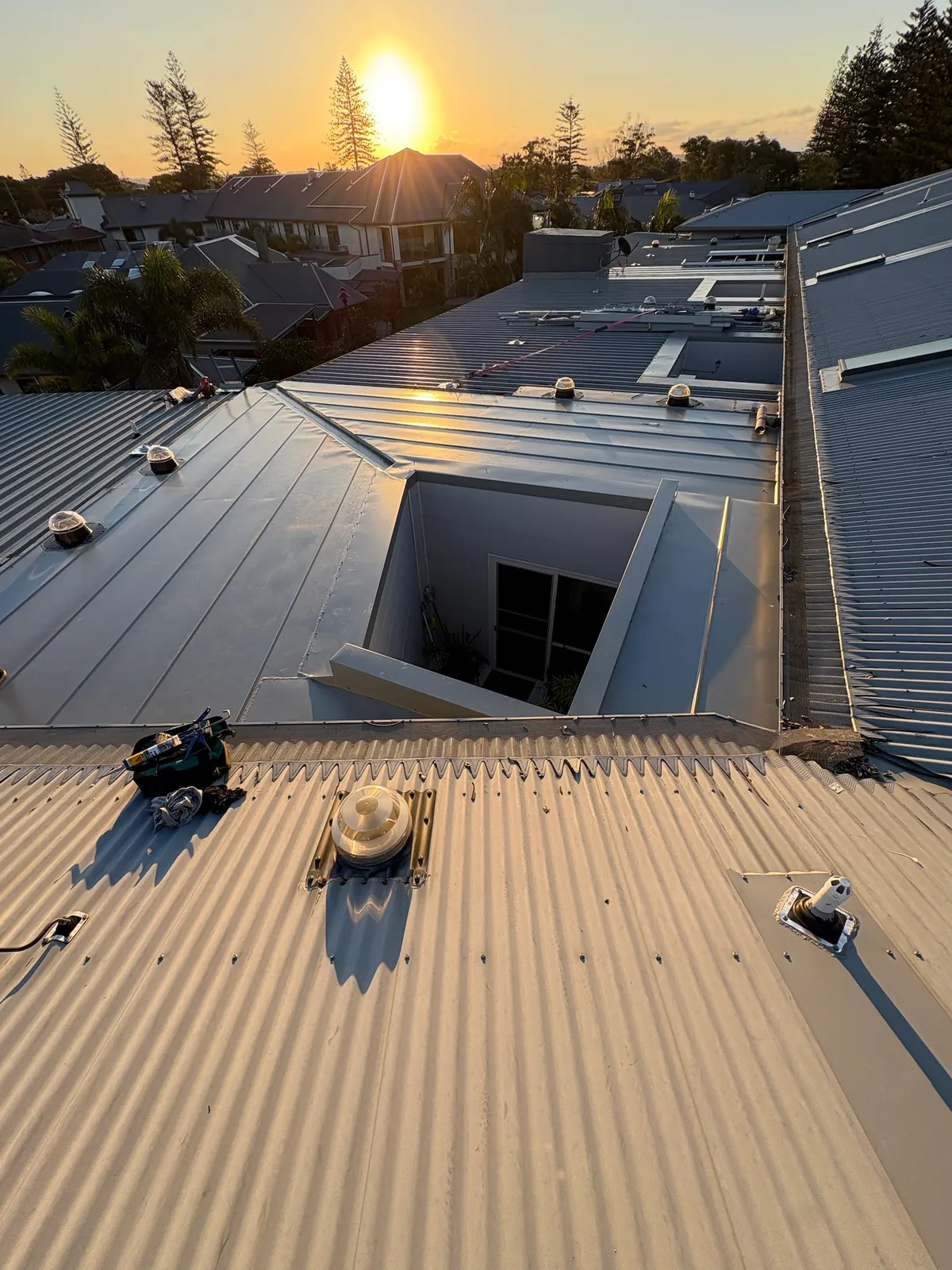
Ballina Heights and Cumbalum: mostly newer Colorbond. Leaks here are usually at penetrations, such as flues, vents, skylights and solar mounts, where a flashing or sealant has failed, rather than in the sheets themselves.
Is it really the roof, or is it the gutters?
On older Ballina homes it's often the gutters. When a gutter is undersized for the roof area, has lost its fall, or feeds into too few downpipes, a summer storm fills it faster than it can drain. The water then spills over the back edge into the eaves and wall cavity and turns up as a stain on the ceiling near an external wall, which looks exactly like a roof leak.
Signs it's a gutter or downpipe problem rather than the roof:
- The stain sits along an outside wall, not in the middle of a room.
- It only appears in very heavy rain, not in steady light rain.
- You can see water pouring over the front or back of the gutter during a downpour.
- Downpipe outlets are rusted where they meet the gutter, or leaf litter from street trees sits in the valleys.
Clearing the gutters fixes it for a while. The lasting fix is checking the fall, the outlet sizes and the number of downpipes, and correcting the cause. Box gutters behind parapets on older Ballina shops and houses need extra care, because when they overflow the water goes straight inside.
Why do some Ballina roof leaks keep coming back after they've been fixed?
Usually because the same spot was patched again instead of the cause being fixed. Silicone on a flashing, a dab of sealant around a screw or a smear of mortar on a ridge cap can stop a drip for a season, but salt, sun and the summer storms open it up again.
One Ballina job shows the difference. The owners had a leak that several others had already tried to fix without success. Patching the same spots again wasn't going to work, so we stripped out the old flashings and replaced them with seamed flashings, plus custom-made parapet flashings to suit the roof. We water tested it once the work was finished, and it no longer leaks.
If your leak has been "fixed" more than once, ask for the cause in writing before anyone goes up again. A flashing that was the wrong profile, a valley that's rusted underneath, or a gutter that overflows will keep beating a patch.
What does a roof leak repair cost in Ballina?
Most single leaks in Ballina are a few hours' work: tracing the path and fixing the cause. These are our current Northern Rivers prices from the cost guide, confirmed on site before we start.
- Roof leak detection and repair
- from $350, with most repairs landing between $350 and $900
- Gutter and valley clearing and sealing
- from $300
- Rusted valley replacement
- from $500 per valley
- Broken tile replacement
- from $300 plus $50 per extra tile
- Localised rust treatment
- from $400
- Emergency storm tarping
- from $500
Our minimum call-out is $300. If the cause turns out to be bigger than one leak, the next step up is a whole-roof job: tile ridge repointing and rebedding from $2,000, or a full metal roof re-screw with Class 4 (AS 3566) coastal screws from $2,000.
For comparison, The Quote Yard's New South Wales guide puts leak investigation and a minor repair at $250 to $500. Our from-$350 price includes tracing the cause, not just patching the stain. What pushes any leak price up is the same everywhere: hard access, more than one source, rusted valleys or flashings that need replacing rather than resealing, and water damage inside that's been going on for months.
When do Ballina roofs leak most?
The wet end of summer. The Bureau of Meteorology's Ballina Airport station averages about 1,856 mm of rain a year, and February, March and April are the wettest months, with March the wettest of all at about 230 mm on average. That's when blocked valleys, tired pointing and perished screw washers get found out, usually in the same week as everyone else's.
Storms matter as much as totals. Strong easterlies push rain sideways and upwards, so a roof that never leaks in steady rain can drip in a storm. If your leak only shows up in wind, tell whoever comes out which direction the weather was coming from. It narrows the search to one side of the roof.
The best time to get a slow leak fixed is late winter or spring, before the storm season, when the roof is dry, the job is quicker and you're not waiting in a queue behind storm call-outs.
What should you do in the first hour of a roof leak in Ballina?
Stay off the roof while it's wet or windy. Wet Colorbond and tiles are slippery, and a leak in a storm is exactly when people take risks. Then:
Catch the water with buckets and towels and move furniture, rugs and electronics out of the way. If water is near a light fitting, a downlight or a ceiling fan, turn that circuit off at the switchboard. If the ceiling is bulging, keep people out from under it. A small hole in the lowest point lets water drain into a bucket instead of the whole sheet coming down. Take photos and a short video of the stain, the drip and the weather. Insurers and repairers both find them useful. Call a roofer. For storm damage and urgent leaks we aim to make-safe the same or next day, weather permitting, and quote the permanent repair once the weather clears.
Our guide to a roof leaking in heavy rain goes through these steps in more detail.
How do you stop a Ballina roof leaking again?
Fix the cause, not the stain, and then keep the roof's drainage working. For most Ballina homes that means:
Gutters and valleys cleared at least once a year, and twice a year near trees or the beach. A roof check every 1 to 2 years, and every year for beachfront roofs or roofs 10 years or older. A fresh-water rinse of the areas rain doesn't reach, such as under the eaves and the underside of gutters. BlueScope's maintenance bulletin says to wash those areas every six months as a minimum, or every three months in coastal areas. Class 4 (AS 3566) screws and flashings made for the job whenever anything is replaced, so the repair outlasts the salt.
Not every Ballina roof needs work. If yours drains well, the pointing is intact and the screws are sound, a check every year or two (yearly if you're beachfront or the roof is 10 years or older) is all it needs.
Next step: get your Ballina leak traced and fixed
If you've got a stain, a drip or a gutter that overflows in heavy rain, call Coastal Roofing Repairs on 0412 483 911 or send a few photos through the quote form. We're based in Lennox Head, 15 minutes up the road, insured, and we'll tell you what's causing it before we quote the fix. If you'd rather know the whole roof's condition first, a roof report from $249 gives you photos, condition ratings and costs, and the fee is credited to any repairs booked within 30 days.
Questions
Common questions
Sources
Need this checked on your roof?
We're local to Lennox Head and cover the whole Northern Rivers. Every job is photo-documented and warranted.
- roof leak repair Ballina
- leaking roof Ballina
- roof leak cost
- gutter repairs Ballina
- flashing repairs
Coastal Roofing Repairs
Local Northern Rivers roofers · 28 years on the tools · insured
Written by the Coastal Roofing Repairs team, 28 years roofing on the NSW North Coast. We work on coastal metal and tile roofs every day — these guides come straight from what we see on the tools, not a marketing desk.