Why Do Coastal Roofs Need Repairs So Often? A Northern Rivers Guide
Coastal roofs need repairs more often because five things work on them at once: salt air, wind, strong sun, humidity and storms. On the Northern Rivers the roof sheets and tiles themselves usually hold up well. It is the small parts that give out first, such as screws, washers, sealants, flashings, gutters and ridge pointing, and most of those are repairs rather than a new roof.
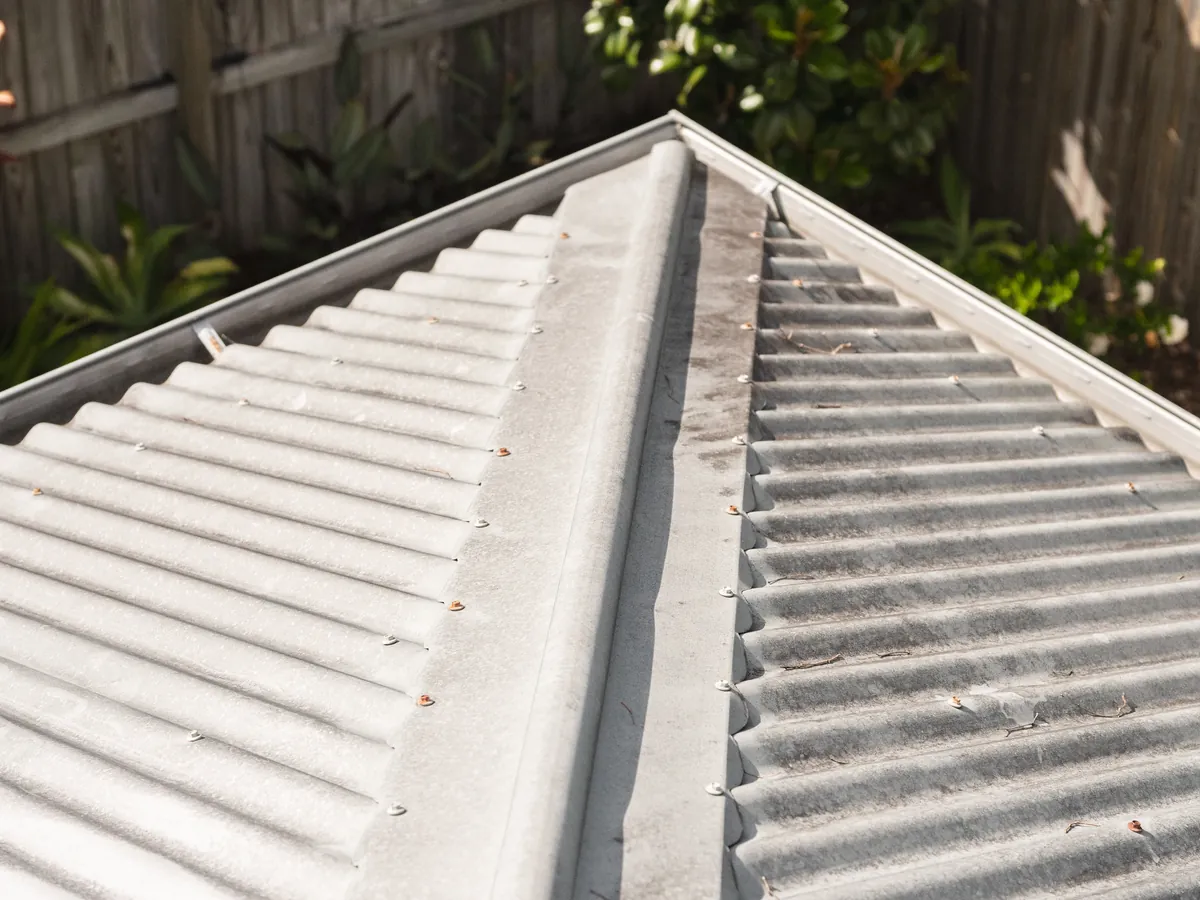
Why do roofs near the coast wear out faster than roofs inland?
A roof a few streets back from the beach in Lennox Head, East Ballina or Suffolk Park lives a harder life than the same roof in a dry inland town. Salt settles on it most days. On-shore wind works at every fixing. The sun is strong for much of the year, the air is humid, and the wet months bring heavy rain and the odd big storm.
None of these is unusual on its own. The trouble is that they stack up. Salt and moisture start corrosion, heat and wind loosen fixings, and the next storm finds the weak spot. That is why coastal roof repairs tend to be small and regular rather than one big job every few decades.
The short version: Salt air corrodes exposed metal, starting at screws, cut edges and overlaps. Wind and daily heating and cooling loosen fixings over time. Sun breaks down rubber washers, sealants and old pointing. Humidity and rain keep the roof damp and feed moss and lichen. Storms test every weak point at once.
What does salt air do to a metal roof?
Salt carried on sea spray and wind lands on the roof and holds moisture against the metal. Open roof areas get rinsed every time it rains. Sheltered spots do not, so salt builds up under eaves, on the underside of gutters, under flashings and where sheets overlap. Corrosion usually starts in those places, and at cut edges and screw holes where the protective coating is thinnest.
Distance from the water matters a lot. BlueScope, the maker of Colorbond steel, grades sites by how far they are from breaking surf. For roofing it recommends standard Colorbond steel from about 200 metres back, Colorbond Ultra steel between 100 and 200 metres, and a stainless steel product inside 100 metres. On its scale only sites more than a kilometre from the water are rated benign, and it notes that prevailing winds and unwashed areas change how a roof performs.
So a roof on the beachfront at Lennox Head or Byron Bay carries far more salt than one in Alstonville or Bangalow. An older roof built with the wrong grade of steel or the wrong screws for its location will show it first.
Why do screws and fixings fail before the roof sheets?
On most coastal metal roofs we look at, the sheets are still sound when the fixings are not. Each screw has a rubber washer that seals the hole. Sun and salt harden and crack that washer, the screw head starts to rust, and wind-driven rain gets past it.
Fixings also work loose. A metal roof expands in the heat of the day and shrinks again at night, and on-shore wind makes the sheets flex and vibrate. Year after year that movement backs screws out and wears the holes. Roofers call it fixing fatigue.
The grade of screw matters too. BlueScope's guidance is that fasteners should have the same service life as the roofing they hold down, and that Class 3 screws to Australian Standard AS 3566 should not be used within 400 metres of the ocean. Closer in, Class 4 is the grade it lists for Colorbond roofing. Plenty of older roofs near the beach were fixed with a lower class, which is why a re-screw with Class 4 fixings is one of the most common repairs on this coast.
How do wind, storms and heavy rain add to the damage?
Normal rain falls down and runs off. Coastal rain often arrives sideways. Wind pushes water up under overlaps, flashings and ridge caps, and past any washer or seal that has started to fail. A roof that stays dry in calm rain can leak in a windy downpour for exactly this reason.
The Northern Rivers also gets a lot of rain. The Bureau of Meteorology's long-term average for Ballina Airport is about 1,780 millimetres a year, with rain on roughly 120 days, and February and March are the wettest months. Gutters and valleys that are partly blocked or rusted cope in a shower and overflow in a downpour.
Then there are the big systems. The Bureau describes east coast lows as intense lows that sit close to the eastern coast and bring damaging to destructive winds, heavy to intense rain and dangerous seas. A night of that finds every loose sheet, cracked ridge cap and tired flashing on a roof. Most storm damage we see started as a small fault that was already there.
What do sun and humidity do to a coastal roof?
Ultraviolet light is hard on anything rubbery or painted. It dries out screw washers, cracks the sealants around skylights, vents and flashings, and chalks old paint. Once a sealant has cracked, salt and water get in behind it.
Humidity does the slow work. Roofs here stay damp for longer after rain and overnight, especially on shaded south-facing slopes and under trees. That dampness keeps corrosion going on metal and lets moss, lichen and mould take hold on tiles. Leaf litter in gutters and valleys holds salt and moisture against the metal, which is why gutters often rust through from the inside while the roof above still looks fine.
Do tile roofs near the coast have the same problems?
Different parts, same pattern. Concrete and terracotta tiles themselves generally cope with coastal weather. What wears is everything that holds the roof together and carries water off it.
Ridge caps sit on a bed of mortar and are sealed with pointing. Older roofs used rigid sand and cement pointing, which cracks as the roof moves with heat and wind. Once it cracks, wind-driven rain gets under the caps and the caps can work loose. Repointing with a flexible pointing compound deals with that because the compound moves with the roof.
The metal parts of a tile roof corrode like any other metal near the sea. Valley irons, flashings and gutters are the usual suspects. Tiles can also crack or slip in storms, and lichen holds moisture on shaded slopes.
Which parts of a coastal roof need repair first?
In rough order, this is what we find first on roofs between Evans Head and Brunswick Heads:
1. Screws and washers on metal roofs, especially on the side facing the ocean. 2. Sealants and flashings around skylights, vents, chimneys and wall junctions. 3. Gutters, valleys and downpipes, from blockage and rust. 4. Cut edges and overlaps of metal sheets, where rust starts. 5. Ridge cap pointing and bedding on tile roofs. 6. Individual cracked or slipped tiles.
Almost all of these are repairs. Replacing whole sheets or a whole roof comes much later, and often not at all if the small things are kept up with.
Does every coastal roof need constant repairs?
No, and it is worth being clear about that. A roof with the right materials for its location, fixed with the right screws and kept reasonably clean, can go for years needing nothing more than a look and a gutter clean. A newer roof a few kilometres inland at Cumbalum, Wollongbar or Lismore is under far less salt load than one on the beachfront.
Roofs that need attention more often tend to be close to the surf, older, facing the prevailing wind, shaded by trees, or built with fixings that were never meant for the coast. Even then, it usually means a small job from time to time, not a constant drain.
One simple habit helps. Colorbond's own maintenance advice is to hose down the areas rain does not reach, such as the underside of eave gutters and walls under eaves, at least every six months and more often near the coast. Do it from the ground with a garden hose, and leave anything that involves getting on the roof to someone with the right safety gear.
What it costs on the Northern Rivers
These are the current ranges from our 2026 cost guide for the common coastal repairs. Every price is confirmed on site before work starts, and roof size, pitch, storeys, access and the extent of damage all move the number.
Standard roof report: $249. Gutter cleaning: from $300. Gutter and valley clearing and sealing: from $300. Broken tile replacement: from $300 plus $50 for each extra tile. Roof leak detection and repair: from $350, with most repairs landing between $350 and $900. Localised rust treatment: from $400. Rusted valley replacement: from $500. Emergency storm tarping: from $500. Tile ridge repointing and rebedding: from $2,000. Metal roof re-screw with Class 4 screws: from $2,000. Annual roof maintenance plans start from $295 a year for a standard single-storey home. The minimum call-out is $300.
The pattern in those numbers is the point. The early fixes are in the hundreds. The jobs they head off, such as replacing rusted-through sheets or repairing a water-damaged ceiling, cost a good deal more.
Where to start if you are not sure what your roof needs
Start by looking from the ground. Rust rings around screw heads, brown streaks below them, cracked ridge pointing, sagging or overflowing gutters and stains on a ceiling are all worth acting on. If you see none of that and the roof is fairly new, it may well be fine.
If you want a clear answer, a roof report is the simplest way to get one. From $249 you get a photo record of the whole roof, condition ratings, a priority list and repair costs, and the fee is credited against any repairs booked within 30 days. If the roof is in good shape, the report will say so.
Call 0412 483 911 or book a roof report online. We are based in Lennox Head and cover Ballina, Byron Bay, Bangalow, Alstonville, Lismore, Evans Head, Brunswick Heads and the suburbs in between.
Common questions
Sources
Need this checked on your roof?
We're local to Lennox Head and cover the whole Northern Rivers. Every job is photo-documented and warranted.
- coastal roof repairs
- salt air
- roof maintenance
- Class 4 screws
- Colorbond roof
- tile roof repointing
- storm damage
- Northern Rivers
Coastal Roofing Repairs
Local Northern Rivers roofers · 28 years on the tools · licensed & insured
Written by the Coastal Roofing Repairs team, 28+ years roofing on the NSW North Coast. We work on coastal metal and tile roofs every day — these guides come straight from what we see on the tools, not a marketing desk.